
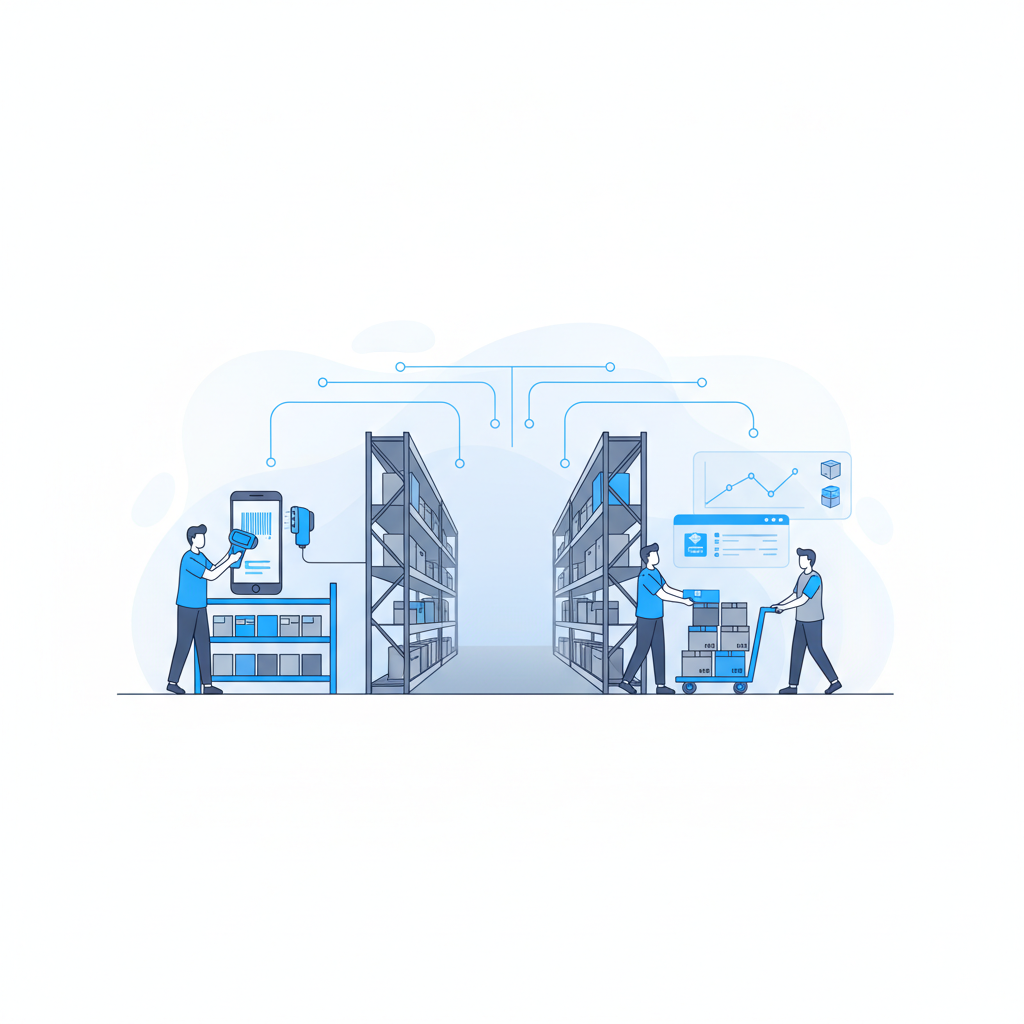
A wholesale and B2B fulfillment WMS playbook is a repeatable set of warehouse processes, built on a system like Shipider, for handling bulk orders, case and pallet units, and retailer compliance requirements without manual spreadsheets or guesswork. It covers receiving full truckloads, tracking inventory by pallet and lot, verifying large orders before they leave the dock, and replenishing distributor stock on a schedule instead of a panic.
If you move product to retailers, resellers, or other businesses instead of directly to consumers, your warehouse has different pressure points than a DTC operation. Order volume per shipment is higher. Units are often cases or pallets, not single items. A shortage or mislabel does not just annoy one customer, it can trigger a chargeback from a retailer's compliance team weeks later. This playbook walks through where wholesale fulfillment breaks on spreadsheets and manual logs, and what the workflow looks like when it runs on a proper WMS.
Why wholesale and B2B fulfillment breaks spreadsheet-era warehouses
Most small distributors and B2B sellers start the same way: a spreadsheet for inventory, a paper packing slip for outbound orders, and someone's memory for which pallet has which lot. That works until order volume or SKU count grows past a point where one person can hold the whole picture in their head.
The failure modes are predictable. A picker pulls from the wrong pallet because two lots of the same SKU sit in adjacent locations. A bulk order ships one case short and nobody notices until the customer's receiving dock counts it and files a chargeback. A buyer calls asking which lot a damaged case came from, and the answer takes an hour of searching instead of a few seconds. None of these are staffing problems. They are process and visibility problems, and they get worse, not better, as volume climbs.
B2B buyers are also less forgiving than individual consumers. A retailer or distributor partner has its own compliance requirements, its own receiving process, and often a contract that lets it deduct chargebacks directly from payment. A wholesale fulfillment operation needs proof, not apologies.
How B2B wholesale fulfillment differs from DTC fulfillment
The two models share some infrastructure (receiving, storage, picking, shipping) but the operational emphasis is different enough that treating them identically usually means under-serving one side. The table below lays out the practical differences a warehouse manager has to plan around.
| Dimension | DTC / e-commerce fulfillment | Wholesale / B2B fulfillment |
|---|---|---|
| Typical order size | 1 to a few units per order | Cases, pallets, or full truckloads |
| Unit of measure | Each / single SKU item | Case, pallet, and mixed pallet configurations |
| Verification before ship | Helpful but often single-scan | Usually needs independent second-check before dispatch |
| Dispute exposure | Customer complaint, refund | Formal chargeback, retainer deduction, or compliance fine |
| Traceability need | Order history | Lot, batch, and pallet-level history for recalls or disputes |
| Replenishment pattern | Demand-driven, frequent small restocks | Scheduled bulk replenishment tied to purchase cycles |
| Multi-location need | Often single site or simple multi-warehouse | Frequently multi-site with cross-site transfers between distribution points |
If your operation sits on the right-hand column, a WMS built around single-item DTC picking will feel like the wrong tool even if it technically supports cases and pallets. The workflow design, not just the feature list, needs to match.
The wholesale fulfillment workflow in Shipider
Shipider covers receiving, putaway, pallet and SKU tracking, order processing, and dispatch on one audit trail, with camera-based barcode scanning that runs in the browser on any phone. For wholesale and B2B operations specifically, four parts of that workflow matter most.
Receiving bulk inbound freight
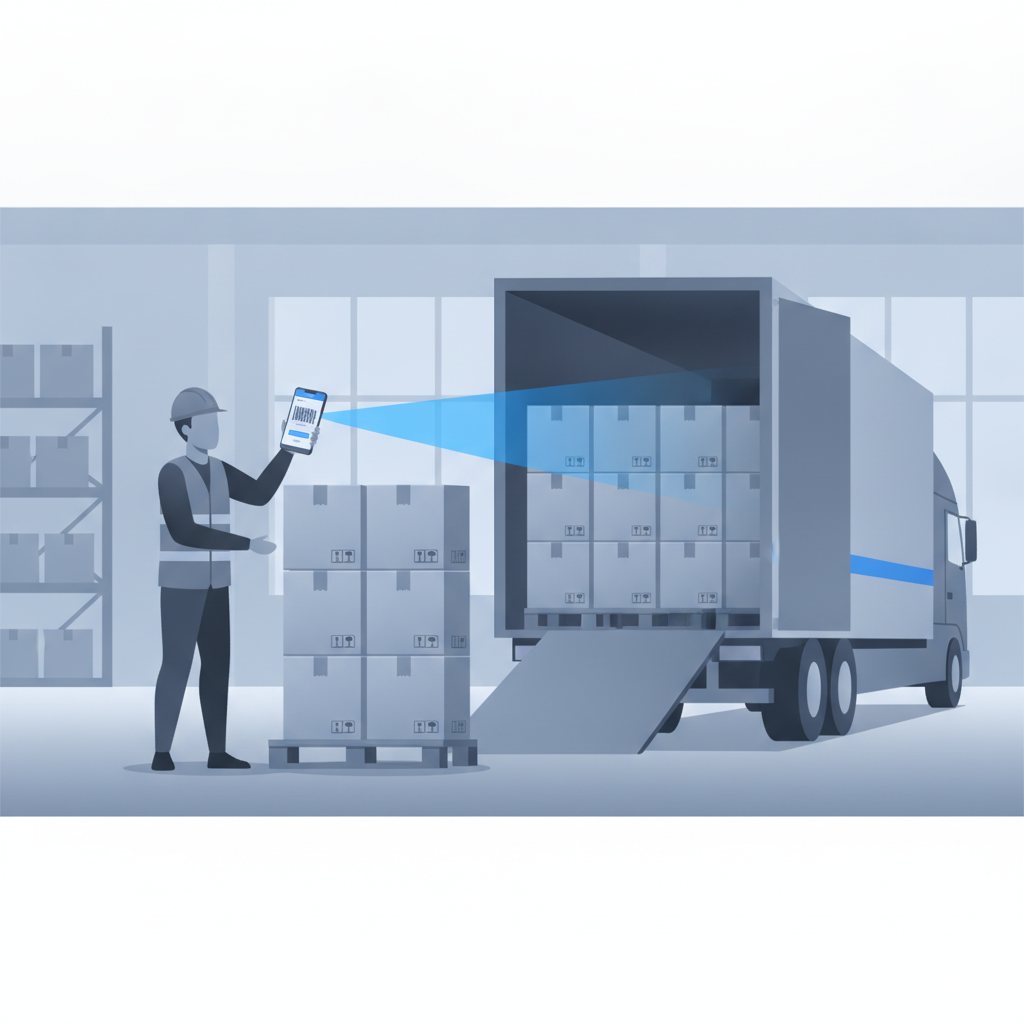
Full truckloads and large purchase orders need receiving that does not depend on someone manually counting cases off a clipboard. Scanning cartons or pallet labels as they come off the trailer creates an immediate, timestamped record of what arrived, tied to the purchase order it belongs to. Discrepancies between what was ordered and what showed up get flagged at the dock instead of discovered three weeks later during a cycle count.
Putaway and pallet-level tracking
Once freight is received, it needs a warehouse location, and for wholesale operations that location is usually tracked at the pallet level rather than the individual unit level. Shipider's pallet and SKU tracking keeps a record of which pallet sits in which location, which lot or batch it belongs to, and its full movement history. For businesses handling perishable, regulated, or recall-sensitive goods, this pairs directly with lot and batch tracking, covered in more depth in this guide to lot and batch tracking.
Case and pallet picking with verification
Bulk order picking usually means pulling whole cases or full pallets rather than individual eaches. The risk is not usually picking the wrong item, it is pulling from the wrong lot, missing a case in a multi-pallet order, or shipping a partial order as complete. This is where maker-checker verification earns its place in the workflow: one person picks and scans, a second person independently verifies the pick before it is marked ready to ship. Both scans sit on the same audit trail, so if a retailer later disputes quantity or lot, there is a record showing exactly who picked what, when, and who confirmed it.
Multi-site inventory for distributor networks
Distributors running more than one warehouse, or 3PLs fulfilling wholesale orders for multiple brand clients, need inventory visibility that spans sites without merging them into one undifferentiated pool. Shipider's multi-site inventory keeps stock levels and movement separate per location while still giving a combined view when needed, and its multi-tenant isolation keeps each client's inventory, orders, and history structurally separate on the same platform. The mechanics of running that kind of multi-client operation are covered in this piece on multi-tenant 3PL warehouses, and in the dedicated 3PL solution overview.
Handling chargebacks, shortages, and retailer compliance disputes
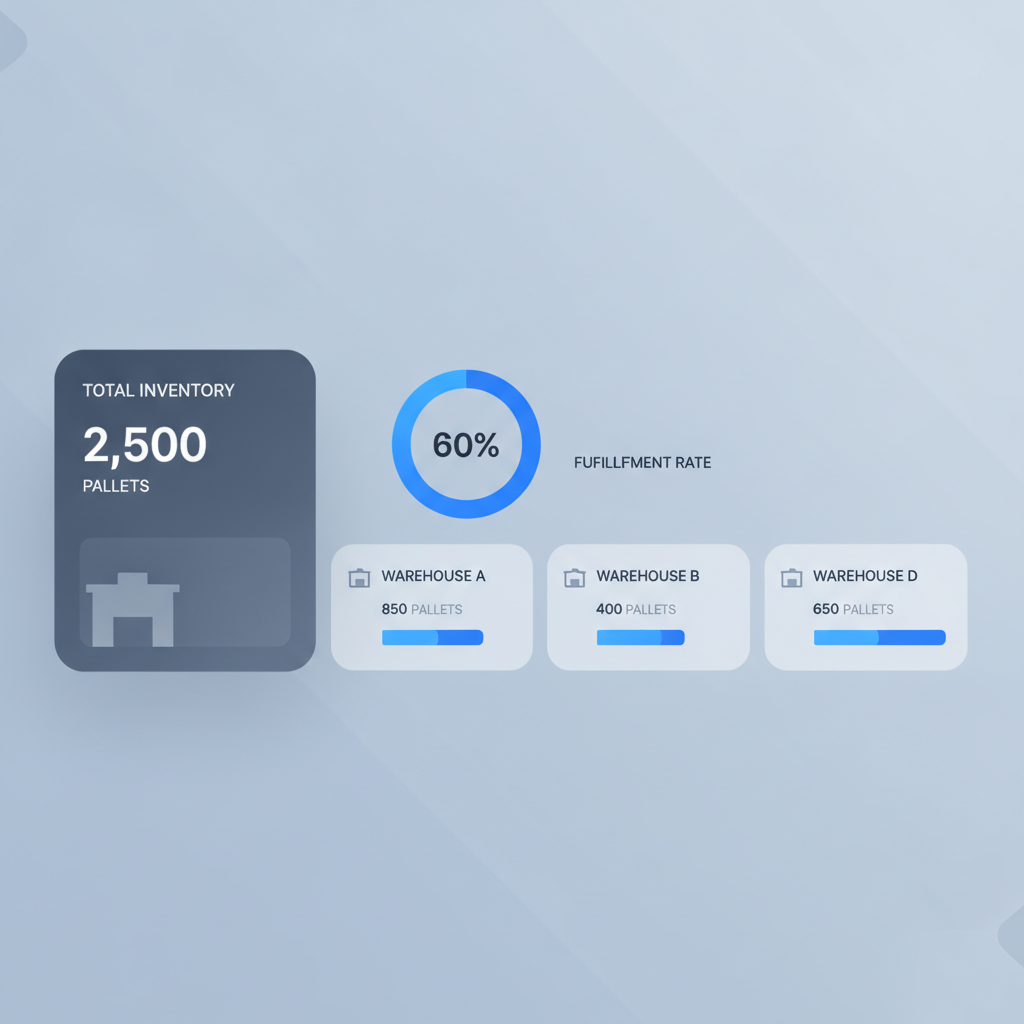
Chargebacks are the most expensive failure mode in wholesale fulfillment, and they are rarely about the actual shipment going wrong. More often, the shipment was correct but the warehouse has no evidence to prove it. A retailer claims a pallet arrived short, or that cases were damaged in transit, and the distributor has no photo, no signature, and no scan record to push back with.
A real audit trail changes that conversation. Every scan, every maker-checker confirmation, and every pallet movement is logged with a timestamp and a user. When a dispute comes in, the question shifts from who do we trust to what does the record show. Pairing that audit trail with photo and signature capture at dispatch gives a distributor something concrete to send back when a retailer's compliance team opens a deduction. That approach is covered in detail in the damaged pallet dispute workflow guide and why every pallet should ship with proof.
Replenishment and reorder points for distributor stock
B2B replenishment is usually scheduled rather than reactive: a distributor commits to keeping certain SKUs in stock for a retail partner, or a manufacturer ships bulk orders to a network of regional warehouses on a cadence tied to purchase agreements. Getting this wrong in either direction is costly. Understock and you miss a committed ship date or lose a retail placement. Overstock and you tie up warehouse space and cash in slow-moving pallets.
Reorder points built around actual lead time and historical movement, rather than gut feel, keep replenishment predictable. The fundamentals of setting those thresholds, including the difference between reorder point and safety stock, are laid out in this reorder point and safety stock guide, and the same logic scales from a single small warehouse up to a distributor running several sites, since Shipider tracks stock levels and movement history per location.
Getting started without a six-month rollout
Wholesale and B2B operations often assume a WMS upgrade means a long integration project with an ERP, a hardware order for scanner guns, and a go-live date months out. That is the enterprise-vendor pattern, and it is not how Shipider is built. Setup starts with an Excel import of existing SKUs, locations, and open orders. Scanning runs through the camera on any phone already on the floor, so there is no hardware to procure or configure. Pricing is token-based, which means a small distributor pays for what it actually processes instead of a per-seat license sized for headcount it may not have. A full breakdown of that pricing model is in this usage-based versus per-seat pricing comparison, and current plans are listed on the pricing page.
For a distributor or 3PL deciding whether this fits alongside other operational changes, it helps to see the full range of warehouse scenarios Shipider is built to handle, from single-site B2B shippers to multi-client 3PLs, covered across the broader industry playbooks collection. The solutions overview is a good next stop for matching your setup to the right configuration.
Frequently asked questions
What makes wholesale fulfillment different from e-commerce fulfillment in a WMS?
Wholesale fulfillment centers on case and pallet units, larger order sizes, and retailer compliance risk like chargebacks, while e-commerce fulfillment is typically single-unit, higher-frequency, and consumer-facing. A WMS built for both needs to support pallet-level tracking and independent order verification, not just fast single-item picking.
Do I need lot or batch tracking for wholesale fulfillment?
You need it if you handle perishable goods, regulated products, or anything a retailer or regulator might trace back through a recall. Lot and batch tracking links every unit to its source batch and its full movement history, which also speeds up resolving shortage or damage disputes with retail partners.
How does maker-checker verification reduce chargebacks?
Maker-checker verification requires a second, independent scan to confirm a pick or order before it ships, catching quantity errors, wrong lots, or missed cases before they leave the warehouse. Because each confirmation is logged on an audit trail, a distributor also has evidence to dispute chargebacks that are not accurate.
Can a small distributor run multi-site inventory without a big IT project?
Yes. Shipider's multi-site inventory tracks stock and movement separately per location while allowing a combined view, and setup starts with an Excel import rather than a custom integration, so a distributor running two or three warehouses can be operational in days, not months.
Is a WMS overkill for a small wholesale operation still using spreadsheets?
It depends on order volume and dispute exposure rather than company size. If chargebacks, lot tracing, or multi-location replenishment are already eating staff time on a spreadsheet, that is usually the signal to move, regardless of headcount.
See how Shipider fits a wholesale or B2B distribution operation and start a free account to set it up on your own catalog in minutes.