
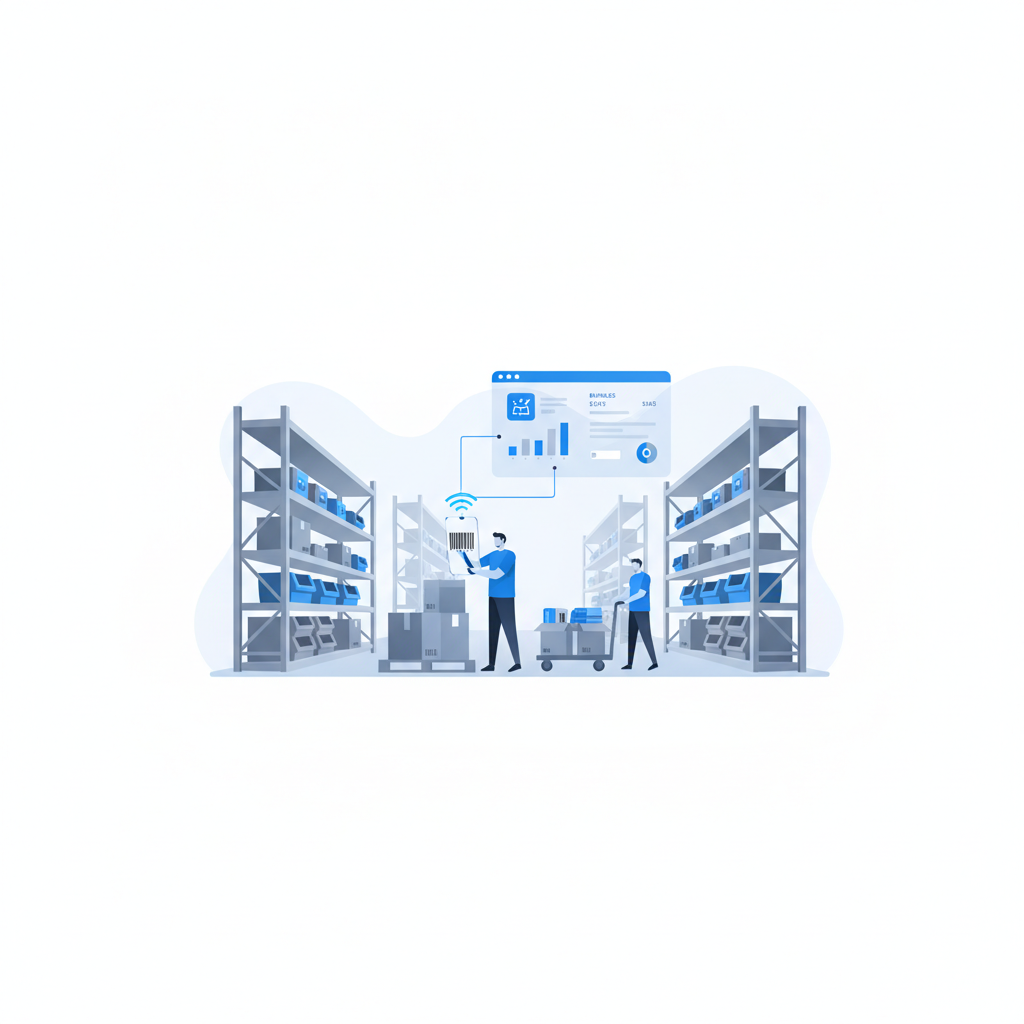
A subscription box or kitting fulfillment WMS is a warehouse system that tracks component SKUs down to the warehouse location, lets staff assemble finished kits against a known recipe, and verifies the build before dispatch, all on an audit trail that shows who picked what and who checked it. Shipider supports this by combining SKU and pallet tracking, warehouse locations, and a maker-checker verification step so a kit built wrong gets caught before it reaches a customer's door, not after a refund request.
Why subscription box and kitting operations break normal fulfillment math
A standard DTC order usually means one SKU, maybe two, picked and packed in a straight line. A subscription box is a different animal entirely. One finished unit, the box a customer receives this month, might consume six, ten, or fifteen component SKUs at once: the hero product, three add-ons, a card, an insert, packaging tissue, and a branded mailer. Run that across a few thousand subscribers shipping on the same week and you have a short, brutal spike of component consumption that has to reconcile perfectly, or you run out of one item while four others sit on the shelf.
Kitting operations for B2B distributors and promotional bundle programs face the same arithmetic problem from a different angle. A retailer order for a "starter kit" or "gift set" draws down several component SKUs the moment it is assembled, whether that assembly happens two weeks before shipment or at pack time. If the component draw is not tracked at the moment of assembly, the inventory system and the shelf disagree within days.
Spreadsheets fail here because they cannot hold the real-time, location-level state of both finished kits and loose components at the same time. A generic pick-pack WMS built for single-SKU orders fails too, because it assumes one order line maps to one pick from one location, not a recipe that draws from five.
The core kitting workflow
Whether you run a monthly subscription box, a seasonal gift-set program, or recurring B2B kits, the operational flow is close to identical. It breaks into four stages: receive components, build kits, verify, and dispatch.
Receive and locate every component SKU
Each component, the hero product, the insert cards, the tissue paper, the branded box itself, gets received as its own SKU and put away to a specific warehouse location. This matters more in kitting than in almost any other fulfillment model, because a kit builder who has to hunt for component B while component A sits staged is losing time on every single box. Clear, consistent locations keyed to SKU make the build station fast instead of a scavenger hunt. For the general receiving and put-away sequence this depends on, see receiving to put-away best practices.
Stage and build the kit
Kit building is where most subscription operations either stay organized or slide into chaos. The build station pulls the defined set of components for that cycle's box, assembles them, and the finished kit becomes its own trackable unit, a new SKU or a dated box variant, moving into its own inventory count. Scanning each component as it goes into the build, using a phone camera rather than a dedicated scanner gun, keeps the record honest without adding hardware to a seasonal or fast-changing build line. See browser barcode scanning with no hardware for how that works on the floor.
[NEEDS VERIFICATION: confirm whether Shipider has a dedicated kit/BOM-assembly feature that auto-deducts component quantities on kit creation, versus kits being modeled as receiving a new finished SKU while components are adjusted out separately]
Verify before it ships, not after a complaint
This is the step most subscription box operators skip, and it is the one that causes the most expensive mistakes: wrong insert in the box, missing add-on, duplicate item. A maker-checker step solves this cheaply. One person builds or packs the kit, a second person scans and confirms the contents match the expected set before the box is sealed. Neither step depends on memory or a sticky note on the wall. For the mechanics of this pattern, see what is a maker-checker workflow.
Dispatch with a record attached
Once a kit passes verification, it moves to dispatch like any other order, but with one advantage: a full audit trail showing which components went into that specific box, who built it, and who checked it. When a subscriber emails three weeks later saying item X was missing, you are not guessing. You are looking at a record.
Kitting requirements versus a basic single-SKU pick-pack flow
The table below lays out where kitting and subscription box fulfillment actually diverge from a standard single-item fulfillment flow, and what each gap demands from the system running it.
| Requirement | Single-SKU pick-pack flow | Kitting / subscription box flow |
|---|---|---|
| Inventory draw per order | One SKU, one location | Multiple component SKUs drawn at once, often from different locations |
| Build step before packing | None, item goes straight to pack | Components assembled into a finished kit before it becomes a packable unit |
| Verification need | Lower, single item is easy to visually confirm | Higher, five to fifteen components per box means more ways to get it wrong |
| Component shortage risk | Stockout on one line | One missing component can stall every box in that cycle's run |
| Traceability on dispute | Order-level record usually enough | Needs component-level record: which items went into this specific box |
| Cycle pattern | Steady, order by order | Sharp recurring spikes on ship dates, then quiet |
Planning the component spike before it hits the floor
Subscription boxes ship in waves, not a steady drip. That means the real planning problem is not daily reorder points, it is making sure every component for a cycle is on the shelf and counted before build day. Running a cycle count a few days ahead of the ship window, rather than relying on the last physical count from weeks earlier, catches the shortfall while there is still time to expedite a component instead of explaining a delay to subscribers. See cycle counting without shutting down the warehouse for how to run that count without stopping other work.
Reorder logic also looks different for kit components than for standalone SKUs, since one popular add-on getting slotted into three different box variants means its draw rate is the sum of all three, not a single demand line. Treating each component's reorder point as tied only to its own SKU's order history, without accounting for how many kit recipes pull from it, is a common way operators run short mid-cycle. The basics in reorder points and safety stock for small warehouses still apply, they just need to be summed across every kit that draws on a given component.
Multi-site kitting and co-pack arrangements
Some subscription box operators run one facility. Others split by region, keep a secondary site for overflow during peak cycles, or hand kitting to a co-pack partner while holding reserve stock elsewhere. Multi-site inventory visibility matters here because a component shortage at one site should not be invisible to the team deciding where to route the next batch of build work. If you are evaluating a system that will need to track components, kits, and finished inventory across more than one physical location, or across customer-specific inventory pools the way a 3PL running subscription clients would, the multi-tenant isolation model matters as much as the kitting flow itself. See running a multi-tenant 3PL warehouse for how isolation and per-client visibility work together.
Why this looks a lot like e-commerce fulfillment, but isn't
Subscription box operators often get grouped with general DTC e-commerce, and the overlap is real: both ship direct to consumers, both deal with returns, both care about pack accuracy. But a DTC brand shipping single-SKU or two-SKU orders does not have a build step. A kitting operation does, and that build step is where most of the operational risk lives. If your subscription program is one piece of a broader DTC operation, the wider fulfillment patterns in the e-commerce fulfillment WMS playbook are worth pairing with the kitting-specific steps here, and the general e-commerce solutions page covers how the platform handles direct-to-consumer order flow outside of kit assembly.
Setting this up without a six-month project
None of this requires new hardware or a long implementation. Component SKUs and locations can be set up through an Excel import in an afternoon, barcode scanning for build and verification runs on any phone's camera inside the browser, and the maker-checker step is a workflow setting, not a custom build. Pricing is token-based, so a seasonal spike in box volume costs more in the months it happens and less in the quiet months between, instead of a flat per-seat fee that stays the same whether you are building ten thousand boxes or two hundred. Details on how that pricing model compares to seat-based licensing are in pricing and in usage-based vs per-seat WMS pricing.
What to check before you commit components to a system
A few questions are worth answering before you pick a system to run kitting through. Can it track a component SKU's location and quantity independently of the finished kit SKU? Does it support a verification step between build and pack, with a record attached, or does it trust whoever packed the box? Can it show you, on demand, exactly which components went into a specific box shipped three weeks ago? And does it scale down in cost during your quiet months the way your box volume does? If a vendor cannot answer the third question clearly, that is the gap that will cost you the first time a subscriber disputes a missing item.
Frequently asked questions
What is kitting in warehouse fulfillment?
Kitting is the process of assembling multiple component SKUs into a single finished unit, like a subscription box or a bundled gift set, before it is packed and shipped. The finished kit is tracked as its own inventory item once assembled, while the components it draws from are tracked separately until build time.
How do you prevent wrong items in a subscription box?
The most reliable method is a maker-checker verification step: one person builds the kit, a second person scans and confirms the contents against the expected component list before it is sealed and shipped. This catches missing or wrong components before they leave the warehouse rather than after a customer complaint.
Do I need a dedicated barcode scanner for kitting and assembly lines?
No. Component scanning during a build or verification step can run on a phone's camera through the browser, which is useful for subscription operations where build stations change seasonally and buying scanner guns for a short-term spike does not make financial sense.
How is subscription box fulfillment different from standard e-commerce fulfillment?
Standard e-commerce fulfillment usually moves one or two SKUs straight from shelf to pack. Subscription box fulfillment adds a build step where several component SKUs are assembled into one finished kit, which creates more points where an item can be missed and makes component-level traceability much more important.
Can a WMS handle both kitting and multi-site inventory for subscription brands?
Yes, a WMS that tracks SKUs and warehouse locations with multi-site visibility can manage component stock across more than one facility or co-pack partner while keeping kit assembly and verification consistent at each location.
If you run a subscription box, bundle, or kitting program and you are tired of reconciling component counts in a spreadsheet after every build cycle, start a free Shipider account and set up your component SKUs and build workflow today.
Related reading: 3PL Per-Customer Invoicing Models: Flat-Rate, Per-Pallet, and Per-Transaction Billing