

A warehouse safety compliance checklist is a recurring list of equipment, housekeeping, and procedural checks that a small warehouse runs daily, weekly, and monthly to catch hazards before they cause an injury or a violation. Shipider does not replace a formal safety program, but it gives small warehouses a way to tie safety checks to the same system they already use for receiving, putaway, and order processing, so the checklist actually gets done instead of living in a binder nobody opens.
Why safety compliance breaks down in small warehouses
Most small warehouses do not have a dedicated safety manager. The job usually falls on whoever runs the floor that day, which means it competes with receiving trucks, picking orders, and fielding questions from staff. A safety checklist that lives on a clipboard or in a shared drive tends to get skipped during busy weeks, which is exactly when fatigue and clutter make incidents more likely.
The second problem is memory. Even a conscientious supervisor forgets which extinguisher was checked last month or which aisle had a loose pallet rack bolt flagged three weeks ago. Without a record, every inspection starts from zero. That is a recordkeeping gap as much as a safety gap, and it is the same kind of gap that causes inventory discrepancies when nobody tracks who moved what.
The core categories of a warehouse safety compliance checklist
A working checklist does not need to be exhaustive on day one. It needs to cover the categories most likely to cause injury or liability in a small warehouse, checked on a cadence that matches the risk.
Fire and emergency readiness
Extinguishers charged and accessible, exit routes clear of pallets and boxes, emergency lighting functional, and evacuation routes posted. This is the category most likely to be reviewed by a local fire marshal or insurer, so it deserves a fixed monthly check at minimum.
Material handling equipment
Forklifts, pallet jacks, and hand trucks need a pre-shift visual check: brakes, forks, hydraulics, warning lights, and horn. Many jurisdictions require a daily forklift inspection log. [NEEDS VERIFICATION: confirm current local or OSHA-equivalent forklift inspection frequency requirements for your region before finalizing a cadence].
Racking and storage
Bent uprights, missing safety pins, overloaded beams, and signage for weight limits. Racking failures are rare but severe when they happen, so a quarterly structural walk plus a faster monthly visual check is a reasonable split for a small facility.
Personal protective equipment
Gloves, safety glasses, high-visibility vests, and steel-toe footwear where required by the work being done. This category is less about inspecting equipment and more about confirming availability and use, which usually means a quick floor walk rather than a formal audit.
Housekeeping and floor conditions
Spills, stray strapping, blocked aisles, and damaged flooring. This is the category most tied to daily operations, because clutter accumulates fastest during receiving and putaway when pallets sit in aisles waiting for a location assignment.
Recordkeeping and training
Incident logs, training sign-offs, and certification renewals for equipment operators. This is the category most often neglected, because it produces no visible floor change, only paperwork.
| Checklist category | Recommended frequency | Typical owner | Risk if skipped |
|---|---|---|---|
| Fire and emergency readiness | Monthly | Floor supervisor | Inability to respond to or evacuate during a fire |
| Material handling equipment | Daily (pre-shift) | Equipment operator | Mechanical failure causing injury |
| Racking and storage | Monthly visual, quarterly structural | Warehouse manager | Collapse, product damage, downtime |
| Personal protective equipment | Daily spot check | Shift lead | Preventable injury from unprotected handling |
| Housekeeping and floor conditions | Daily | All floor staff | Slips, trips, blocked emergency exits |
| Recordkeeping and training | Monthly review | Operations manager | Compliance exposure, no incident trail |
Building the checklist into daily operations
A checklist that exists separately from the work people already do tends to get treated as extra work. The fix is to fold safety checks into steps your team performs anyway, rather than adding a parallel process.
Tie floor checks to receiving and putaway
Receiving is when pallets, strapping, and packaging waste pile up fastest, and it is also when forklifts and pallet jacks are in heaviest use. If your team is already scanning items into defined warehouse locations, a quick aisle clearance check at the end of each receiving session catches most housekeeping hazards before the next shift starts.
Use an audit trail for incident and inspection records
One of the biggest gaps in small warehouse safety programs is proof. When an inspector or insurer asks when the last forklift check happened, "I think it was last week" is not an answer that holds up. Shipider's real audit trail, built for tracking who scanned what and when across receiving, putaway, and order processing, gives you the same kind of timestamped record for safety tasks if you log them as part of your daily workflow. For a deeper look at how that audit trail works across operations, see the guide to warehouse audit trail software.
Make the checklist part of shift handoff
A five-minute handoff conversation that includes "anything blocking an aisle, anything leaking, anything damaged on the racks" catches more than a weekly inspection ever will, because the person closing a shift has the freshest view of the floor. Pair that with a written log, even a simple one, so patterns show up over time instead of disappearing after the conversation ends.
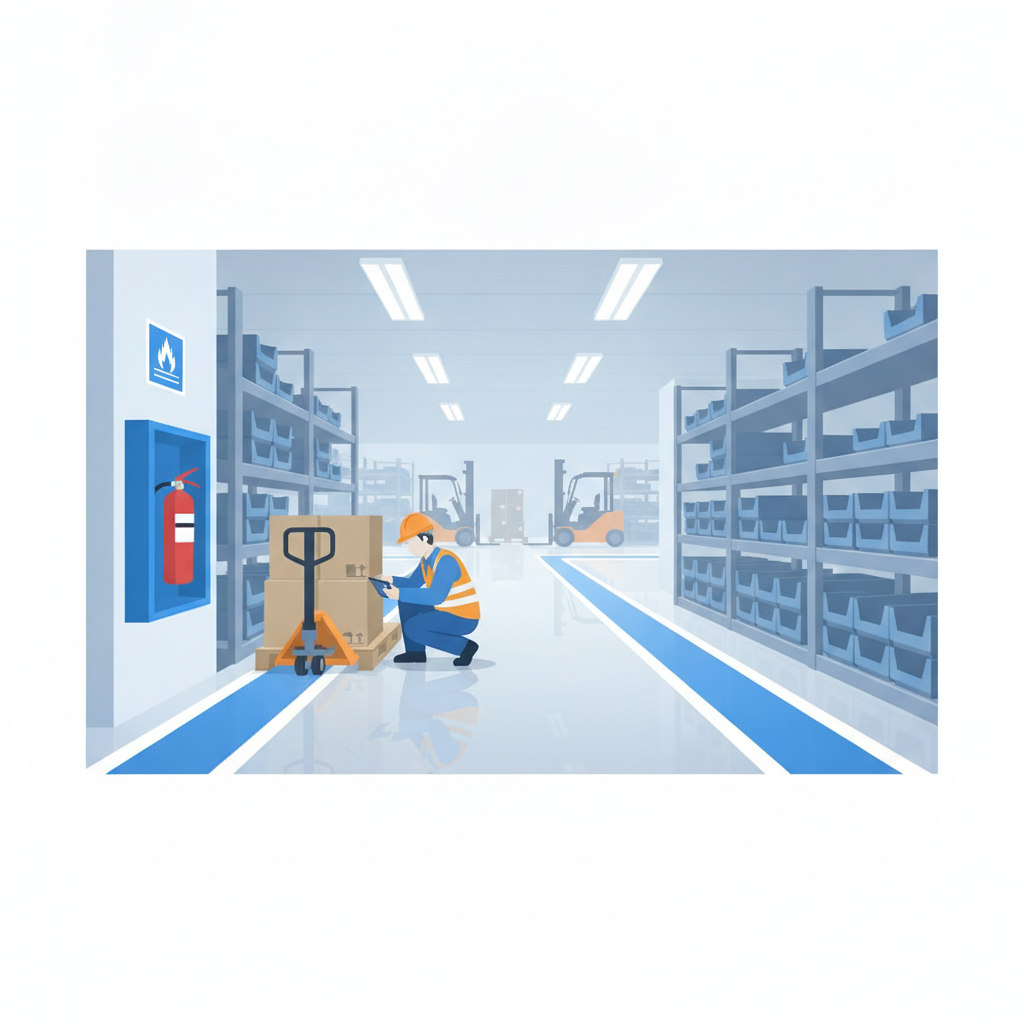
How Shipider supports safety compliance without extra paperwork
Shipider was not built as a safety management tool, and it will not replace a formal EHS program if your warehouse needs one. What it does provide is the operational backbone that makes a safety checklist sustainable in a small team: a real audit trail that timestamps every scan and movement, in-browser camera barcode scanning so staff are not juggling a separate device for equipment logs, and warehouse locations that make it obvious where pallets and material handling equipment should and should not sit.
Because Shipider runs on any phone with a browser, a supervisor can scan a location or asset tag during a safety walk the same way they scan a bin during putaway, and that check becomes part of the same auditable history as every other warehouse event. For teams running multiple sites, that consistency matters even more: 3PLs managing several customer accounts under one roof need the same safety standard applied across every tenant, not a different clipboard per client.
If your warehouse is still coordinating safety checks and inventory on spreadsheets, that is also where discrepancies and hazards both tend to hide, since nobody has a single place to see the full picture of what happened and when. The small warehouse solution page covers how teams move off that setup without a long rollout.
A sample cadence you can adapt
Start simple. A daily five-minute walk covering housekeeping, PPE, and equipment pre-checks. A weekly ten-minute review of near-misses or flagged issues from the daily walks. A monthly structured inspection covering fire readiness, racking, and recordkeeping. Adjust frequency upward for any category tied to local regulatory requirements in your industry or region, since requirements vary by state, country, and the type of goods you handle. [NEEDS VERIFICATION: confirm any industry-specific or regional safety regulation that applies to your warehouse, such as cold storage, hazardous materials, or food-grade handling rules, before treating this cadence as compliant with a specific jurisdiction].
The goal of a warehouse safety compliance checklist is not a perfect document. It is a routine your team actually follows, with enough of a record behind it that you can answer "when was this last checked" without guessing. Pairing that routine with the broader operational discipline covered in our warehouse operations hub gives small teams a floor that runs safely and predictably at the same time.
Frequently asked questions
What should a basic warehouse safety compliance checklist include?
At minimum it should cover fire and emergency readiness, material handling equipment checks, racking and storage condition, PPE availability, housekeeping and floor conditions, and recordkeeping for inspections and incidents.
How often should a small warehouse run safety checks?
Housekeeping and equipment pre-checks should happen daily, PPE should be spot-checked daily, fire readiness and racking should be reviewed monthly, and a deeper structural racking inspection should happen quarterly or as required by local regulation.
Who is responsible for warehouse safety in a small team without a dedicated safety manager?
Responsibility usually falls to the floor supervisor or operations manager, with specific daily checks delegated to shift leads and equipment operators, and a monthly review by whoever owns overall warehouse operations.
Does Shipider handle safety compliance management?
Shipider is a warehouse management platform, not a dedicated safety management system. It supports safety routines indirectly through its audit trail, in-browser barcode scanning, and defined warehouse locations, which help small teams log and timestamp safety checks as part of their existing workflow.
Why is a written safety checklist better than verbal reminders?
A written checklist creates a record you can point to when an inspector, insurer, or new hire asks what was checked and when, while verbal reminders leave no trail and rely entirely on memory, which fails during busy weeks.
Ready to run your floor with a real audit trail behind every scan? Start with Shipider and see how receiving, putaway, and daily checks can live in one system.
Related reading: Staffing for Peak Season: Onboarding Temporary Warehouse Labor Fast
Related reading: Multi-Warehouse Inventory Transfers: Moving Stock Between Locations Without Losing Count