
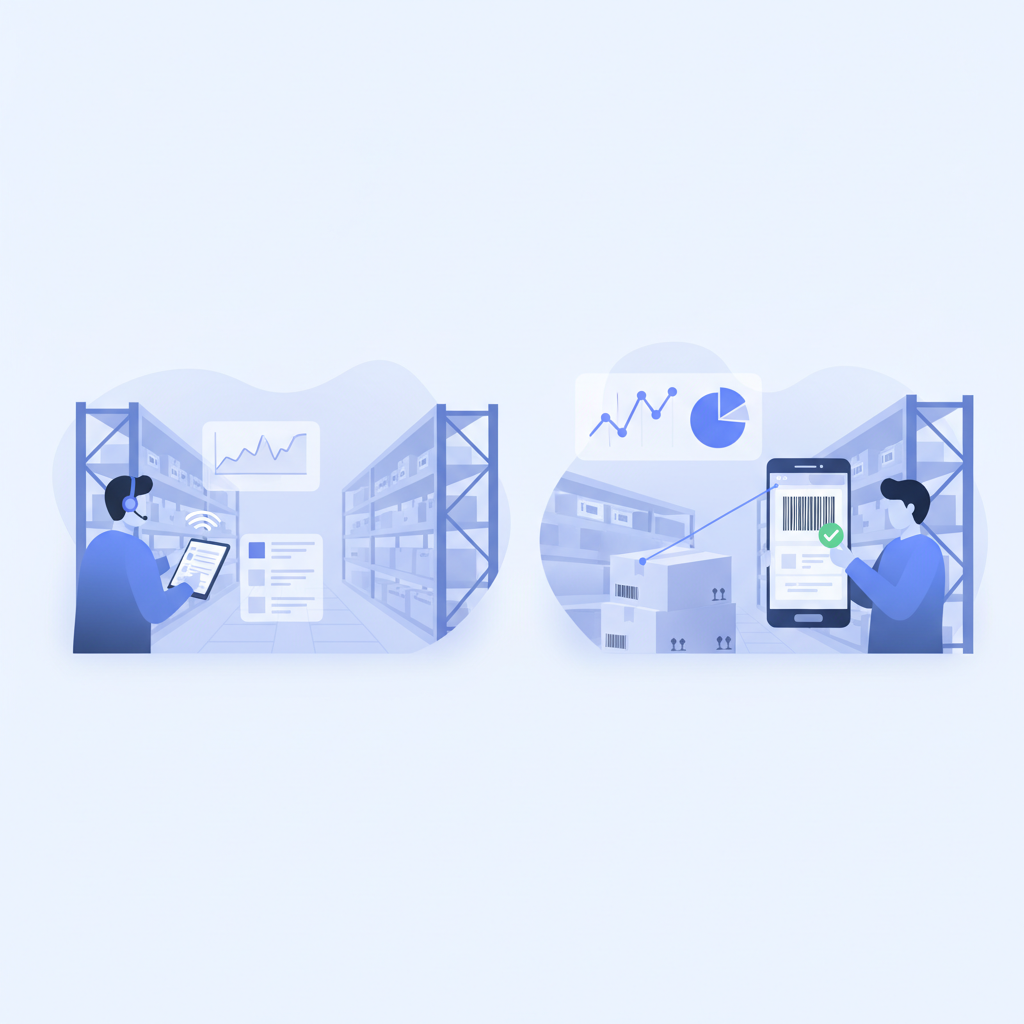
Voice picking uses headsets and spoken prompts to direct a picker to a location and confirm a pick by voice, while barcode scanning uses a camera or laser to read a code and confirm the pick visually; for most small and mid-sized warehouses, barcode scanning (especially phone-camera scanning through a platform like Shipider) fits faster and cheaper because it needs no dedicated headset hardware, no voice-template tuning, and no six-week training ramp. Voice picking can still make sense in narrow, noise-tolerant, hands-busy environments, but it is rarely the right starting point for a warehouse that is just trying to get off spreadsheets.
What voice picking actually is
Voice picking (sometimes called pick-by-voice) puts a headset on each picker. A central system reads out a location and item, the picker walks there, picks the item, and speaks a confirmation code or check digit back into the mic. The system verifies the response and moves to the next task. It grew up in large, often refrigerated or hands-and-eyes-busy environments where a screen or scanner would slow a picker down or where gloves make a touchscreen or trigger scanner awkward.
The technology works. The friction is everything around it: voice templates need to be trained to each picker's accent and speech pattern, hardware has to be charged, sanitized, and replaced when it breaks, and a noisy floor (forklifts, packing tape guns, conveyors) can degrade recognition accuracy. Most voice systems also require their own middleware layer to talk to a warehouse management system, which adds an integration project before a single order ships.
What barcode scanning actually is
Barcode scanning reads a printed or label-based code and matches it against an expected SKU, location, or pallet ID in the system of record. Traditionally that meant a rugged handheld scanner or a Bluetooth scan gun paired to a mobile device. Shipider takes a different approach: camera-based barcode scanning that runs directly in the browser on any phone, so a picker opens a page, points the camera, and the scan is logged against the order, the location, and the audit trail immediately. No app install, no paired hardware, no dedicated device inventory to manage.
For a deeper look at scanning hardware options specifically, see phone camera scanning vs Bluetooth gun vs rugged handheld, which covers the hardware side of this decision in more detail.
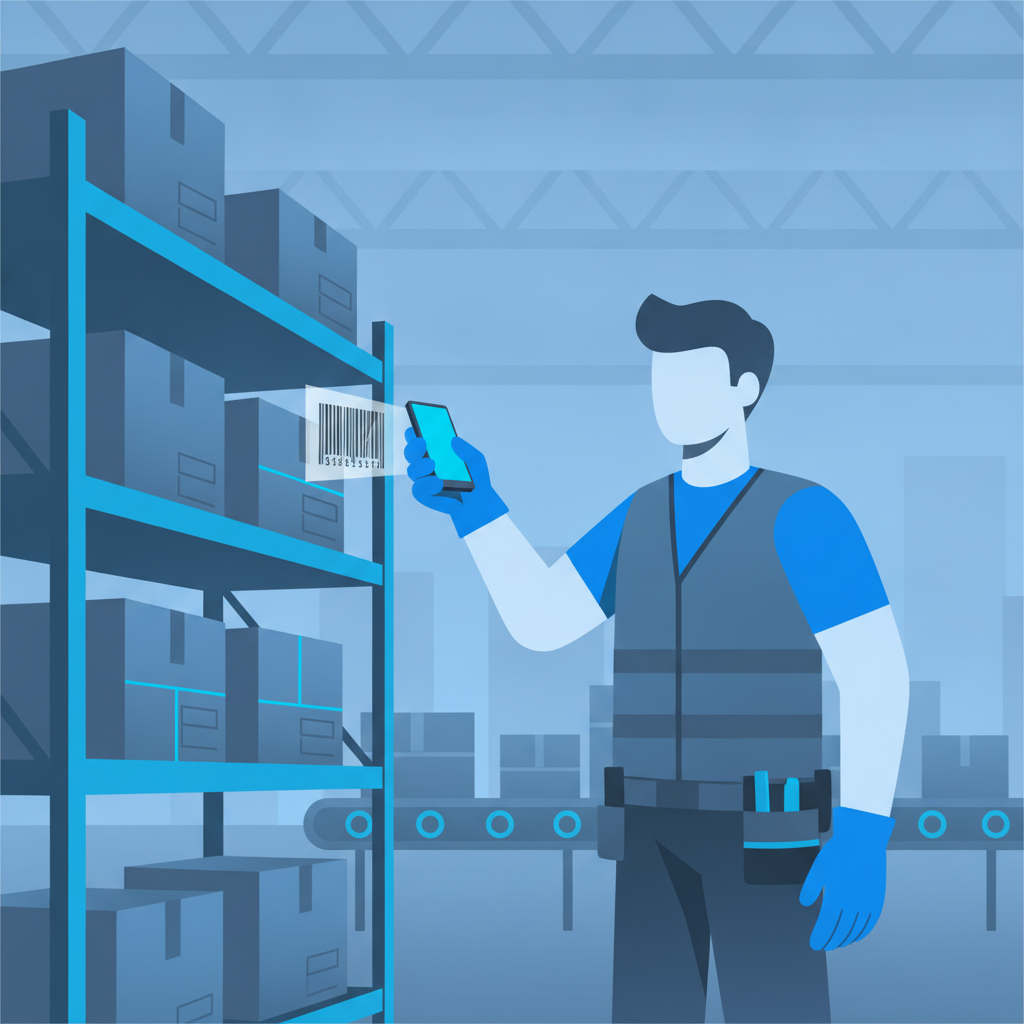
Voice picking vs barcode scanning: side by side
| Factor | Voice picking | Barcode scanning (browser-based) |
|---|---|---|
| Hardware needed | Headsets, belt packs, charging stations | Any phone with a camera, already owned by staff |
| Setup time | Voice template training per picker, system integration | Open a browser page and start scanning |
| Hands/eyes use | Hands and eyes fully free during the pick | One hand briefly occupied during the scan |
| Noise sensitivity | High; loud floors can reduce recognition accuracy | Low; visual confirmation is not affected by sound |
| Best environment | Cold storage, heavy gloves, very high pick volume | General receiving, putaway, picking, and dispatch |
| Ongoing cost | Hardware replacement, licensing, maintenance | Token-based usage, no device fleet to maintain |
| Audit trail | Varies by vendor; often a separate log | Logged directly against order, pallet, and location in one audit trail |
| Rollout timeline | Often weeks, including template tuning | Typically same day, no hardware procurement |
Cost and setup time
Voice picking systems are usually priced per headset plus a software license, and the headsets themselves are a sunk capital cost before anyone picks a single order. Add in spares for when units break or batteries die, and the real cost of outfitting even a ten-person pick team adds up before any accuracy gain shows up on the floor.
Barcode scanning through a phone-based system avoids that capital layer almost entirely. If your team already carries phones (most do), there is no device to buy. Shipider's pricing is token-based rather than per-seat or per-device, so adding a seasonal picker for six weeks does not mean buying or leasing another headset. For a full breakdown of how usage-based pricing compares to licensing by seat, see usage-based vs per-seat WMS pricing.
Where voice picking actually wins
Voice has a real advantage in a narrow set of conditions: very high-volume, hands-and-eyes-busy picking (think large grocery or cold-chain distribution), environments where workers wear heavy gloves that make touchscreens unreliable, and operations large enough to absorb the integration and training cost across thousands of daily picks. If your warehouse genuinely fits that profile, voice is worth evaluating on its own merits. [NEEDS VERIFICATION: specific accuracy or productivity benchmarks for voice picking vs barcode scanning in comparable facility sizes]
Outside of that profile, the case for voice weakens fast. Most small and mid-sized warehouses are not running at the volume or in the conditions that justify the hardware investment and the training curve.
Where barcode scanning fits a small warehouse better
Small warehouses, growing 3PLs, and DTC brands tend to share a few traits: variable headcount (seasonal spikes, part-time staff), tight budgets for dedicated hardware, and a need to go live quickly rather than run a multi-week pilot. Barcode scanning through a browser matches that profile directly:
- New pickers can start scanning within minutes of being handed a phone, with no voice template to train.
- There is no device fleet to track, charge, repair, or replace when someone drops one.
- Every scan ties directly into Shipider's maker-checker verification, so a second scan confirms an order before it ships rather than relying on a spoken confirmation code that cannot be independently reviewed later.
- Scans feed the same real audit trail used for receiving, putaway, and dispatch, so a manager can see who scanned what, when, without stitching together separate voice and inventory logs.
This is also why the no-hardware argument shows up across more than just voice picking: see do you need a barcode scanner gun for the same question applied to dedicated scan guns versus phone cameras.
What the audit trail difference means in practice
Voice confirmation relies on a spoken check digit being matched correctly in the moment. If a dispute comes up later (wrong item shipped, quantity mismatch), there is often no visual record to point to, just a log entry saying the confirmation matched. Barcode scanning tied to a maker-checker workflow gives you a second layer: one person scans the pick, a second person verifies it before dispatch, and both actions are timestamped against the order and the pallet. That difference matters most when a customer disputes a shipment and someone has to show, not just claim, what happened.
Making the call for your floor
A simple way to decide: if your team already carries phones, your pick volume does not require two free hands at all times, and you want to be live this week rather than next quarter, barcode scanning is the lower-risk, lower-cost starting point. If you run a high-volume, hands-busy, cold-chain or heavy-glove operation at real scale, voice picking deserves a proper evaluation against its own cost structure.
For most teams reading this, the practical next step is testing phone-camera scanning against your actual SKUs and locations rather than committing to headset hardware up front. You can see how this fits into a broader automation strategy on the automation and integrations hub, or look at how a 3PL specifically uses no-hardware scanning across multiple clients on the 3PL solutions page.
Frequently asked questions
Is voice picking more accurate than barcode scanning?
Accuracy depends more on process design (single confirmation vs a maker-checker second check) than on the input method itself. Barcode scanning paired with a second verification step, like Shipider's maker-checker workflow, gives you an independent check that a spoken confirmation alone does not provide.
Does voice picking require special hardware?
Yes. Voice picking needs headsets, belt-worn terminals or paired mobile devices, and often a dedicated middleware layer to connect to your warehouse management system, all of which add cost and setup time before you pick a single order.
Can a small warehouse use barcode scanning without buying scanners?
Yes. Shipider runs camera-based barcode scanning directly in the browser on any phone, so staff can scan receiving, putaway, picking, and dispatch without a dedicated scan gun or paired Bluetooth hardware.
Which option is cheaper to roll out for a small team?
Barcode scanning through existing phones is almost always cheaper to start because there is no headset or scan-gun fleet to purchase. Shipider's token-based pricing also means you are not paying a per-seat license for every added picker during a seasonal spike.
Is voice picking ever the better choice?
It can be, in high-volume, hands-and-eyes-busy environments like large cold storage or heavy-glove operations where freeing both hands matters more than setup speed or cost. Most small and mid-sized warehouses do not operate at that scale, which is why barcode scanning is usually the simpler starting point.
Ready to see phone-based barcode scanning and maker-checker verification on your own floor? Create a free Shipider account and scan your first receiving pallet in minutes, no hardware order required.