

A Sortly alternative for warehouses is a system that keeps Sortly's simple barcode tagging but adds what warehouses actually run on: receiving and putaway workflows, pallet and location tracking, maker-checker verification before orders ship, and structural multi-tenant isolation for 3PLs. Shipider is built for that exact gap, covering the full floor rather than just tracking item counts in folders.
Where Sortly fits and where it stops
Sortly built its reputation as an easy way for small businesses to tag assets and inventory with QR codes or barcodes, organize them into folders, and check quantities from a phone. That is a genuinely useful job, and plenty of teams outgrow spreadsheets by moving to something like it first. The trouble starts when a business stops being a single location with simple stock and becomes an actual warehouse: multiple storage locations, inbound pallets that need to be received and put away, orders that get picked and packed by different people, and (for 3PLs) several client inventories that must never mix.
Sortly was not designed around warehouse locations, putaway logic, or a second-person check before an order leaves the building. It tracks what you have and where you last said it was, but it does not enforce a workflow for how stock moves from dock to shelf to order to truck. For a supply closet or a small retail backroom, that is fine. For a warehouse floor with pickers, packers, and inbound freight, it leaves gaps that show up as mis-ships and disputed pallets later.
The core gaps: multi-tenant isolation and maker-checker
Two gaps matter most for warehouses and 3PLs evaluating a move away from Sortly.
No structural multi-tenant isolation
3PLs running multiple client accounts under one roof need more than tagged folders per customer. They need genuine data isolation so one client's stock counts, orders, and reports can never leak into another's, along with the ability to roll operations up for the 3PL's own team while keeping each client's view separate. Sortly's organizational model is built around personal or single-business inventory, not around running several independent tenants on one platform. Shipider was built 3PL-first: isolation is structural, not a workaround built from tags and permissions. See how that plays out in practice in running a multi-tenant 3PL warehouse.
No maker-checker verification
Maker-checker is a two-step process where one person performs an action (picking an order, receiving a pallet) and a second person verifies it before it counts as final. It is the single biggest lever for cutting mis-ships and shrinkage disputes, because a mistake has to get past two independent checks instead of one. Sortly has no concept of this. A quantity update is a quantity update, made by whoever has access, with no built-in second scan or approval step. Shipider bakes maker-checker into the order and receiving workflows, so every action carries a record of who did it and who confirmed it. If you want the full mechanics, what is a maker-checker workflow walks through the definition and warehouse examples.
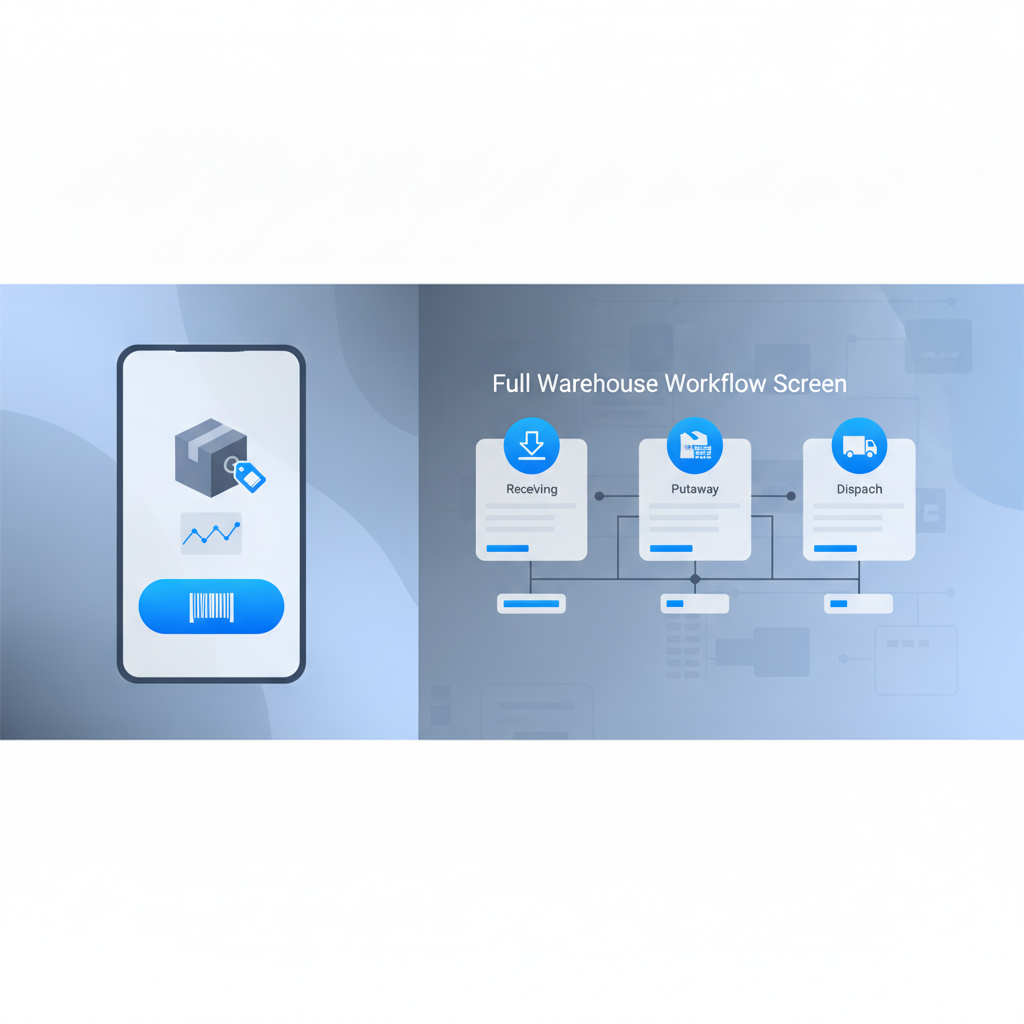
Side-by-side: Sortly vs Shipider
| Capability | Sortly | Shipider |
|---|---|---|
| Core purpose | Inventory and asset tracking for small businesses | Full-floor warehouse management (receiving to dispatch) |
| Barcode scanning | Mobile app scanning for item lookup and count updates | Camera-based barcode scanning in the browser on any phone, no dedicated hardware |
| Warehouse locations and putaway | Folder-based organization, not location-based putaway logic | Defined warehouse locations with a structured receiving-to-putaway workflow |
| Pallet-level tracking | [NEEDS VERIFICATION: whether Sortly supports pallet-level grouping distinct from item/folder tagging] | Pallet and SKU tracking with photos and a full movement history |
| Order verification | Single-step quantity updates, no built-in second check | Maker-checker two-step verification on picks, receipts, and dispatch |
| Audit trail | Activity history at the item level | Real audit trail across every action, tied to the maker-checker record |
| Multi-tenant / 3PL support | Designed for a single business, not multiple isolated client accounts | Structural multi-tenant isolation built for 3PLs running many customers |
| Multi-site inventory | [NEEDS VERIFICATION: current multi-location support tiers in Sortly's plans] | Native multi-site inventory visibility across warehouses |
| Pricing model | Seat and plan-based subscription tiers | Token-based usage pricing, no per-seat penalty for growing teams |
| Setup | Fast, app-based onboarding | No hardware required, setup measured in days not months |
The pattern is consistent: Sortly answers "how much of this do we have and where is it," while Shipider answers that plus "who moved it, who checked it, and can we prove it if a client or client's client disputes a shipment."
When Sortly is genuinely the right call
It is worth being honest here. If you are tracking office equipment, a single storeroom of supplies, or light retail inventory with one location and no complex order flow, Sortly's simplicity is an advantage, not a limitation. Switching to a warehouse-grade system before you need one adds overhead for no benefit. The signal to move is usually one of these: you have started receiving pallets that need a real putaway step, you run more than one storage location, you are shipping enough orders that a mis-ship costs real money, or you are a 3PL (or about to become one) with more than one client's stock in the building.
What switching actually looks like
Moving off a tagging app does not have to mean a long rollout. Shipider imports existing item and quantity data, lets you define your real warehouse locations, and turns on camera-based scanning on phones your team already carries, no scanner guns to order or wait for. Because pricing is token-based rather than per seat, adding pickers or packers during a busy stretch does not mean negotiating a new contract. For a deeper look at how usage-based pricing compares to seat licensing, read usage-based vs per-seat WMS pricing. If you serve 3PL clients specifically, Shipider for 3PLs covers the multi-tenant setup in more detail, and the broader framework in WMS alternatives: a framework for evaluating your next warehouse system is useful if Sortly is one of several tools you are comparing.
A short checklist before you decide
- Do you receive inbound pallets that need a defined putaway step, or does stock just "arrive" into a folder?
- Does more than one person touch an order before it ships, and do you need a second check on that?
- Do you (or will you) hold inventory for more than one client under separate, isolated records?
- Do you need proof, photos, and a timestamped audit trail if a shipment or pallet is disputed?
- Are you paying for seats you do not use, or bracing for a price jump as your team grows?
If you answered yes to two or more, you have likely outgrown a tagging app and are looking at true warehouse management, which is exactly where Shipider is built to sit.
Frequently asked questions
Is Sortly a warehouse management system?
No. Sortly is inventory and asset tracking software aimed at small businesses. It does not include warehouse-specific workflows like structured receiving and putaway, pick-and-pack verification, or multi-client 3PL isolation, which are core to a WMS like Shipider.
What is the main reason warehouses move off Sortly?
The most common reasons are needing a second verification step before orders ship (maker-checker), needing isolated inventory for multiple clients as a 3PL, or needing location-based putaway and pallet tracking instead of simple folder tagging.
Does Shipider require new barcode scanner hardware to replace Sortly's app?
No. Shipider uses camera-based barcode scanning that runs directly in the browser on any phone, so teams switching from Sortly's mobile scanning do not need to buy dedicated scanner guns.
Can a 3PL run multiple clients on Shipider the way it might try to on Sortly?
Yes, and this is a structural difference. Shipider is built with multi-tenant isolation specifically for 3PLs, keeping each client's inventory, orders, and reporting separate, which is not something Sortly's single-business model was designed to do.
How does maker-checker reduce mistakes compared to a simple quantity update?
Maker-checker requires a second person to verify an action, like a pick or a received pallet, before it is finalized. A single mistaken scan or miscount can no longer slip through unnoticed, because it has to pass an independent check and gets logged in a real audit trail.
If your floor has outgrown folders and tags, create a free Shipider account and see how receiving, maker-checker verification, and multi-tenant isolation work on your own inventory.
Related reading: Shipider vs Extensiv: Feature and Pricing Comparison for Small 3PLs
Related reading: Shipider vs ShipHero: Which Fits a Lean 3PL or DTC Brand