
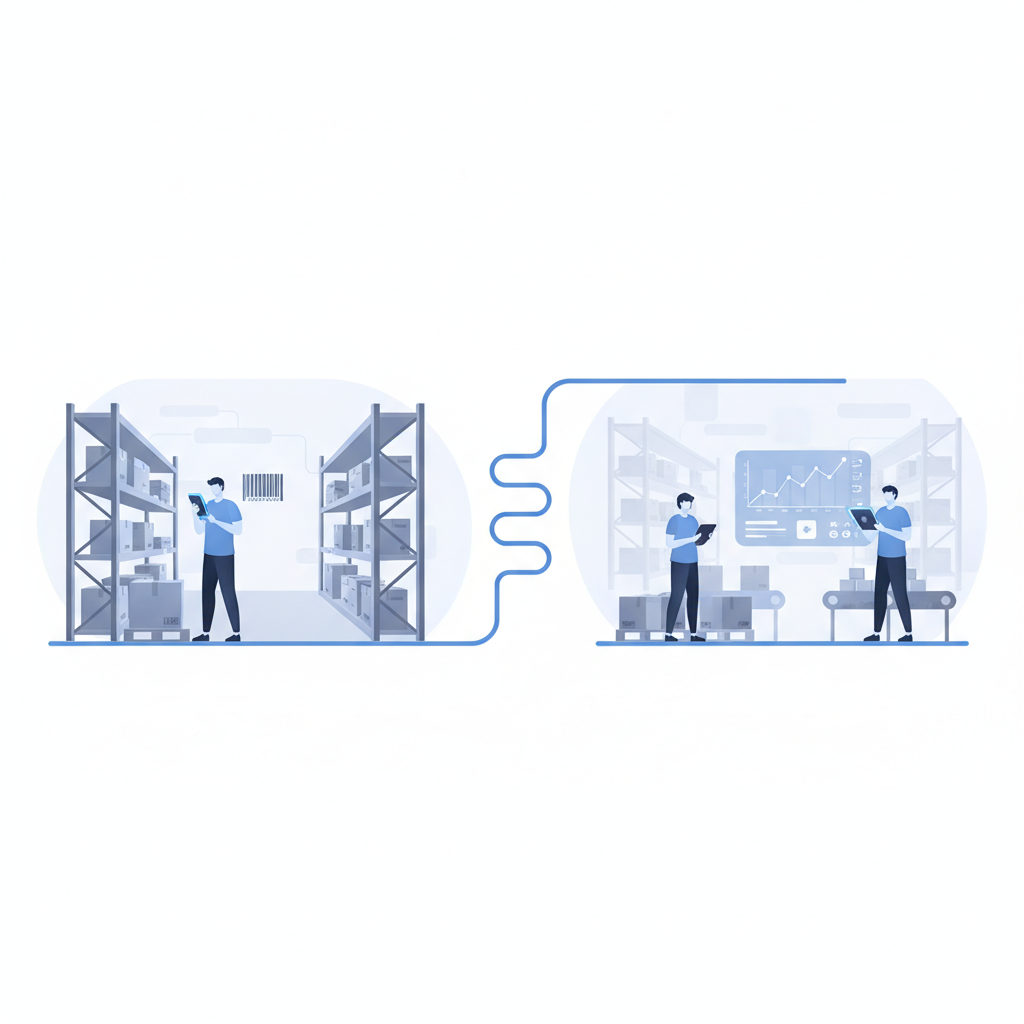
Shipider and Extensiv are both warehouse management platforms built to serve third-party logistics operators, but they differ in how they price, deploy, and verify work on the floor: Shipider runs on token-based usage pricing with a five-minute setup and browser-based scanning, while Extensiv is a longer-standing platform aimed at 3PLs that need billing automation and a wider integration marketplace. This article lines up the two on the criteria that actually matter to a small 3PL owner comparing options: cost, setup time, order accuracy controls, and how each handles multiple customers under one roof.
What Shipider and Extensiv actually do
Shipider is a multi-tenant WMS built for small and mid-sized warehouses, 3PLs, e-commerce brands, and B2B distributors that have outgrown spreadsheets. It covers receiving, putaway to specific warehouse locations, pallet and SKU tracking, order processing with a two-step maker-checker verification, and dispatch, all logged on a real audit trail. Scanning happens through the camera on any phone, in the browser, with no handheld hardware to buy or provision.
Extensiv (formerly known in parts of the market as 3PL Central) positions itself as a WMS aimed squarely at 3PL billing and client management, with a broader third-party integration marketplace and features built around warehouse-for-hire operations. [NEEDS VERIFICATION: confirm Extensiv's current product name, core module list, and whether it still operates under a unified brand as of this writing.]
Feature comparison at a glance
The table below lines up the two platforms on the dimensions that come up most often in small-3PL buying conversations. Where a detail about Extensiv could not be confirmed from public, verifiable sources, it is flagged rather than guessed.
| Criteria | Shipider | Extensiv |
|---|---|---|
| Pricing model | Token-based, usage-driven, real free tier | [NEEDS VERIFICATION: confirm current tiered/per-warehouse pricing structure and whether a free tier exists] |
| Setup time | Minutes, no hardware to procure, Excel import supported | [NEEDS VERIFICATION: confirm typical onboarding timeline] |
| Barcode scanning | In-browser, phone camera, zero dedicated hardware | [NEEDS VERIFICATION: confirm scanning hardware requirements] |
| Order verification | Maker-checker two-step scan on every order before dispatch | [NEEDS VERIFICATION: confirm equivalent verification workflow, if any] |
| Audit trail | Full, immutable, tied to every scan and status change | [NEEDS VERIFICATION: confirm audit trail depth and immutability] |
| Multi-tenant isolation | Structural, built for 3PLs running many customers under one roof | [NEEDS VERIFICATION: confirm isolation model and client billing tools] |
| Multi-site inventory | Native, single account across warehouses | [NEEDS VERIFICATION: confirm multi-site support] |
| Rollout length | No six-month implementation | [NEEDS VERIFICATION: confirm typical implementation timeline for larger deployments] |
Pricing model: tokens vs tiered plans
Shipider charges based on usage through tokens, which means a small 3PL handling a modest volume of pallets and orders is not paying for seats or modules it never opens. The usage-based pricing model scales with actual activity rather than headcount, and the current published rates live on the pricing page.
Extensiv's pricing structure, tiers, and whether it charges per warehouse, per client, or per user are not consistently published in a way that can be verified here. [NEEDS VERIFICATION: confirm Extensiv's current pricing tiers and minimum contract terms.] Any 3PL comparing the two should request a written quote from Extensiv that spells out per-client fees, since 3PL billing structures often carry add-on costs for each brand onboarded.
Setup and onboarding time
A small 3PL rarely has the bandwidth for a multi-month rollout. Shipider is built around fast onboarding: warehouses can import existing inventory from Excel, assign locations, and start receiving within a day, not a quarter. There is no hardware to order and wait on, since scanning runs through a browser on whatever phone the picker already carries.
Extensiv's onboarding timeline depends on the scope of the deployment and which modules a 3PL selects. [NEEDS VERIFICATION: confirm typical Extensiv onboarding duration for a small 3PL with a handful of clients.] If a demo call quotes weeks of configuration before go-live, that is a fair question to ask directly and compare against Shipider's setup path described in the off-Excel playbook.
Maker-checker verification and audit trail
This is where the two platforms diverge most clearly on paper. Shipider builds order accuracy around a maker-checker workflow: one person picks and scans, a second person independently verifies the scan before the order is packed and dispatched. Every step, every scan, and every correction lands on a real audit trail that shows who did what and when, which matters when a client disputes a shipment or a shortage claim comes in.
Whether Extensiv offers an equivalent independent second-check step on outbound orders, or relies on single-scan confirmation, could not be confirmed here. [NEEDS VERIFICATION: confirm whether Extensiv has a two-person verification step comparable to maker-checker, or a single-scan model.] For a 3PL fielding chargebacks from mis-ships, this distinction is worth asking about directly in a demo.

Multi-tenant isolation for 3PLs
3PLs running multiple customers under one roof need structural separation, not just filtered views. Shipider's multi-tenant isolation was built for this from the ground up, so each client's inventory, orders, and history stay separate even though the warehouse team works across all of them from a single login. That structure also supports 3PL operations where clients need their own reporting without seeing each other's data.
Extensiv has historically marketed itself toward 3PL client billing and management use cases, which suggests some form of tenant separation exists, but the depth of that isolation (data-level, account-level, or purely reporting-level) is not something this article can verify with confidence. [NEEDS VERIFICATION: confirm the technical depth of Extensiv's client isolation model.]
Barcode scanning: browser vs hardware
Shipider scans directly through the camera on any phone, in the browser, so a picker or receiving clerk can start working the moment they log in on their own device. There is no rugged handheld to buy, charge, or replace when it gets dropped. The tradeoffs between phone-camera scanning and dedicated scanner guns are covered in more depth in the scanning comparison and the scanner gun decision guide.
Extensiv's scanning requirements, whether it supports browser-based camera scanning or expects dedicated handheld hardware, were not confirmed for this comparison. [NEEDS VERIFICATION: confirm Extensiv's supported scanning hardware and whether phone-camera scanning is available.] If hardware procurement is part of the Extensiv rollout, that adds cost and lead time a browser-based system avoids.
Which one fits a small 3PL
A small 3PL choosing between the two should weigh a few practical questions: how fast can we go live, what does each client cost us to onboard, does the platform catch mistakes before they leave the dock, and can we keep client data cleanly separated without extra configuration. Shipider answers the first three directly through token pricing, five-minute setup, and maker-checker verification. On Extensiv, those same answers depend on the specific plan and modules quoted, so it is worth pushing for written detail rather than relying on general marketing claims. For a broader look at how to evaluate any WMS switch, the WMS alternatives framework and the dedicated Extensiv alternative comparison walk through the same evaluation from a switching angle rather than a straight feature table.
Frequently asked questions
Is Shipider a direct replacement for Extensiv?
Shipider covers the same core 3PL functions of receiving, putaway, order processing, and dispatch, plus multi-tenant isolation, so it can serve as a replacement for 3PLs whose main needs are floor operations and order accuracy rather than complex client billing add-ons.
Does Shipider require barcode scanner hardware like some Extensiv setups might?
No. Shipider scans through the camera on any phone directly in the browser, so there is no dedicated scanner gun or hardware to purchase or provision before going live.
How does Shipider pricing compare to Extensiv's plans?
Shipider uses token-based, usage-driven pricing with a real free tier, published on the pricing page. Extensiv's exact current tiers and per-client fees were not independently verified for this article, so a direct quote comparison is recommended before deciding.
What is maker-checker verification and does Extensiv have it?
Maker-checker is a two-step process where one person picks and scans an order and a second person independently verifies it before it ships, all recorded on an audit trail. Shipider builds this in natively. Whether Extensiv offers an equivalent independent verification step was not confirmed and should be asked directly in any Extensiv demo.
Can Shipider handle multiple 3PL clients under one account without data mixing?
Yes. Shipider's multi-tenant isolation is structural, keeping each client's inventory, orders, and audit history separate while the warehouse team works from a single login across all of them.
If you want to see the maker-checker workflow, browser scanning, and multi-tenant isolation in your own warehouse before committing to either platform, create a free Shipider account and run a real receiving-to-dispatch cycle on your own inventory.
Related reading: Shipider vs ShipHero: Which Fits a Lean 3PL or DTC Brand
Related reading: WMS Alternatives and Comparisons: The Hub for Evaluating Your Next System