
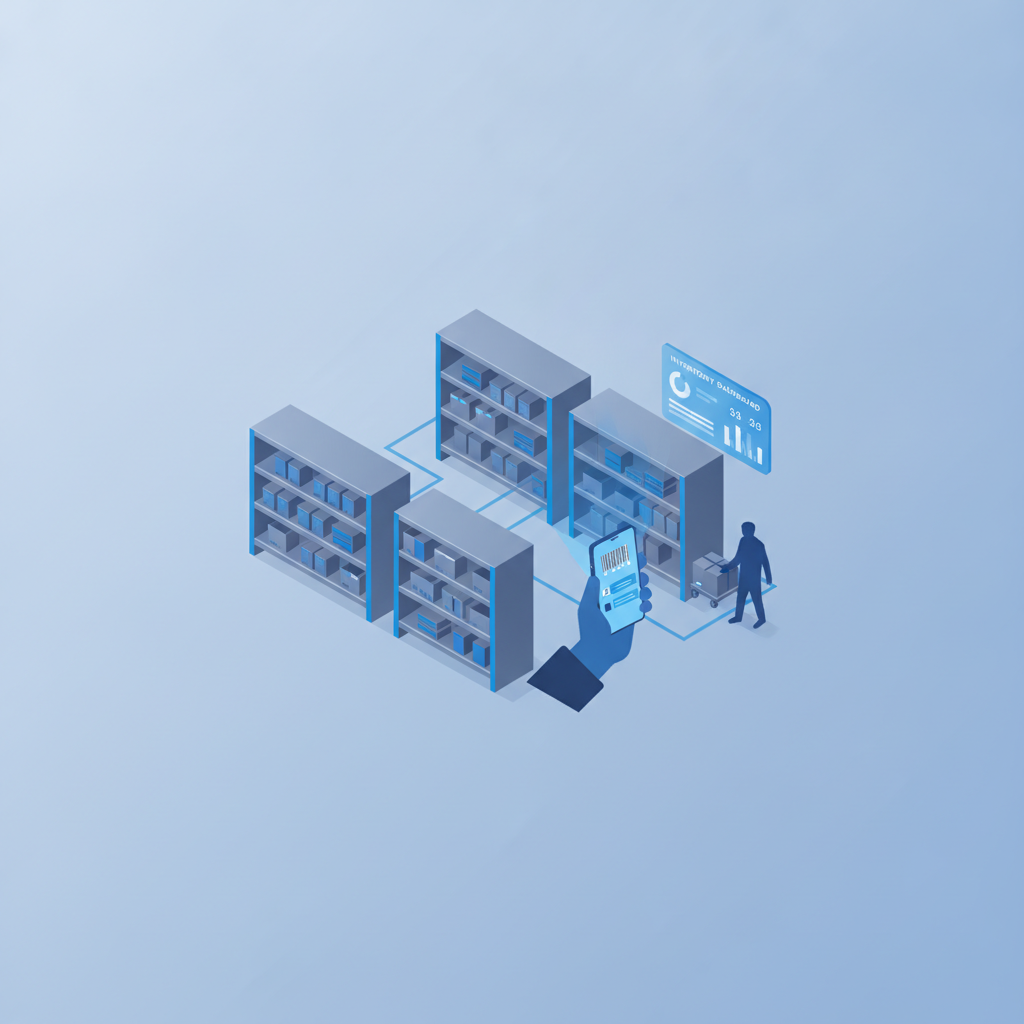
A picking strategy is the method a warehouse uses to decide how orders get pulled from shelves: one at a time, in batches, by zone, or in waves timed to shipping cutoffs. Small warehouses usually need a mix rather than a single textbook method, and Shipider supports that mix by tracking every SKU location and verifying every pick with a second scan before an order ships.
Why picking strategy matters more than it seems
Picking is the most labor-heavy step in most fulfillment operations. Industry estimates commonly put picking at well over half of total warehouse labor time, though the exact share depends on layout and order mix [NEEDS VERIFICATION: cite a specific labor-share statistic if one is needed]. Even without a hard number, the pattern holds in any small warehouse: pickers walk more, touch more items, and make more decisions per shift than anyone else on the floor. Get the strategy wrong and you pay for it in wasted steps, missed items, and orders that go out incomplete.
For a five-person team shipping fifty orders a day, the right strategy looks nothing like what a hundred-person distribution center needs. The goal here is not to copy an enterprise playbook. It is to pick a method that matches your order volume, your SKU count, and the number of people you can put on the floor at once.
Common picking strategies explained
Single order picking
One picker, one order, start to finish. It is the simplest method to train and the easiest to audit, since every pick maps to a single order with no risk of cross-contamination between shipments. The tradeoff is walking distance: if your SKUs are spread across the floor, a picker retraces the same aisles order after order. This works best when order volume is low, under roughly 30 to 40 orders a day, or when orders are unusually complex and need careful handling.
Batch picking
A picker pulls for several orders in one pass, sorting items into separate totes or bins as they go. This cuts walking time significantly when multiple orders share common SKUs, which is typical in eCommerce with a handful of best-sellers driving most volume. The risk is mis-sorting: an item picked for order A ends up in order B's bin. That is exactly the kind of error a second verification scan is built to catch before the order leaves the building.
Zone picking
The warehouse is divided into zones, and each picker stays in their zone, handing off partially completed orders to the next zone or consolidating at a packing station. This suits warehouses with distinct storage areas, cold storage next to dry goods, or bulk pallet storage next to small parts. It reduces walking further but adds a coordination step: someone has to track which zones have completed their part of each order.
Wave picking
Orders are released in scheduled waves timed to carrier pickup windows or shift changes, often combined with batch or zone methods underneath. Wave picking helps when you have hard shipping cutoffs and want predictable output rather than a continuous trickle of orders. Small warehouses sometimes adopt a light version of this: releasing orders in two or three waves a day rather than one at a time as they arrive.
Cluster picking
A single picker works multiple orders simultaneously using a cart with several bins, essentially a mobile version of batch picking. It works well in narrow-aisle environments where a single trip can reasonably serve four to eight orders at once.

Comparing the strategies
| Strategy | Best order volume | Walking efficiency | Error risk | Coordination needed |
|---|---|---|---|---|
| Single order | Low (under ~40/day) | Low | Low | Minimal |
| Batch picking | Medium to high | High | Medium (sort errors) | Low |
| Zone picking | Medium to high | Medium to high | Medium (handoff errors) | Medium |
| Wave picking | Medium to high, with cutoffs | Depends on underlying method | Low to medium | High |
| Cluster picking | Medium | High in narrow aisles | Medium (sort errors) | Low |
How to choose the right strategy for your warehouse
Start with three numbers before picking a method: average daily order count, average SKUs per order, and how many people you can staff on picking at peak. A warehouse doing 30 single-item orders a day with two staff rarely needs anything beyond single order picking. A warehouse doing 300 orders a day with the same headcount almost certainly needs batching just to keep up.
Layout matters as much as volume. If your fastest-moving SKUs sit near the pack station and slower movers are further out, zone picking can isolate the busy area and staff it more heavily. If your warehouse is one open room with even distribution, batch or cluster picking usually wins because there is no natural zone boundary to exploit.
Also look at how orders arrive. If everything comes in continuously through the day with no fixed cutoff, wave picking adds overhead without much benefit. If you have set carrier pickup times, releasing orders in two or three waves keeps the floor calm instead of reactive.
None of these choices are permanent. Many small warehouses start with single order picking, move to batching as volume grows, then add light zoning once they outgrow one open floor. The small warehouse solution page covers how this kind of operation typically scales without adding headcount at every step.
Where technology fits: scanning, verification, and location data
Picking strategy only works if the data behind it is accurate. A batch pick is only as good as the location data telling the picker where each SKU actually sits, and a zone handoff only works if the system knows which zone has completed its part. This is where warehouse locations and SKU tracking do the real work, regardless of which picking method you choose.
Shipider tracks every SKU down to its warehouse location and pallet, so a picker working a batch or zone list is following live data rather than a printed sheet that went stale an hour ago. Picking happens with in-browser barcode scanning on any phone, no dedicated scanner hardware required, which matters for small teams that flex staff on and off the picking floor during busy weeks.
The bigger risk in batch and cluster picking is sorting errors: an item meant for order A landing in order B's bin. Shipider's maker-checker verification addresses this directly. The picker (the maker) scans items into an order, and a second person or a second scan pass (the checker) verifies contents before dispatch. That second check catches the mis-sorts that batch and cluster methods are naturally prone to, without slowing down the initial pick. The maker-checker workflow breakdown covers exactly how that second scan stops mistakes before they ship.
Every pick, verification, and dispatch also lands on a real audit trail, so if an order goes out short a unit, you can trace back to which picker, which zone, and which scan touched it. That traceability matters more as picking methods get more complex, since batching and zoning both introduce more handoffs than single order picking.
Common mistakes when switching picking strategies
Warehouses that move from single order to batch picking often skip the sorting step entirely, assuming pickers will just remember which item goes where. That works for a week, then falls apart during a busy stretch. Build the sort into the process from day one, whether that means labeled bins on a cart or a verification scan per order before it leaves the batch.
Another common mistake is zoning a warehouse that does not have distinct physical zones. If nothing separates one area from another, adding a zone on paper just adds a handoff step with no walking benefit. Zone picking earns its coordination overhead only when the floor actually has separate areas worth isolating.
Wave picking gets misapplied too, usually by warehouses that adopt it because it sounds more sophisticated rather than because they have a real cutoff to plan around. If orders trickle in all day with no fixed pickup time, waves just introduce artificial delay.
Finally, teams sometimes change picking method without updating how receiving and put-away feed location data into the system. A batch or zone strategy depends on accurate, current location data for every SKU. If put-away is inconsistent, the picking strategy sitting on top of it will underperform no matter how well it is designed. The receiving to put-away flow is worth revisiting before any picking strategy change, since clean put-away is what makes any picking method actually work.
Frequently asked questions
What is the best picking strategy for a small warehouse?
There is no single best strategy. Warehouses shipping fewer than roughly 40 orders a day usually do fine with single order picking, while higher volume with shared SKUs across orders benefits from batch picking. The right choice depends on daily order count, SKU overlap between orders, and available staff.
What is the difference between batch picking and zone picking?
Batch picking has one person picking for multiple orders in a single pass through the warehouse, sorting as they go. Zone picking divides the warehouse into areas, with each picker staying in their zone and orders moving between zones until complete. Batch picking reduces walking for one picker; zone picking spreads picking across the floor at once.
Does picking strategy affect order accuracy?
Yes. Single order picking has the lowest inherent error risk since nothing is mixed between orders. Batch and cluster picking introduce sorting risk because multiple orders are handled at once, which is why a verification step before dispatch matters more once a warehouse adopts either method.
How do I know when to switch from single order to batch picking?
Watch daily order volume and SKU overlap. Once picking staff are regularly walking the same aisles multiple times per shift for different orders that share items, batching those trips together usually cuts walking time enough to justify the added sorting step.
Can a small warehouse run more than one picking strategy at the same time?
Yes, and many do. It is common to batch pick fast-moving small items while single-order picking oversized or fragile SKUs that need individual handling. The method should match the item and the order, not stay fixed as one rule for the whole floor.
If your team is still deciding on a picking method, or already knows the process needs better location data and verification behind it, see how Shipider handles both on the warehouse operations hub, or register for Shipider to try it on your own floor.
Related reading: How to Reduce Mis-Ships in a Warehouse: A Packing Workflow That Actually Works