
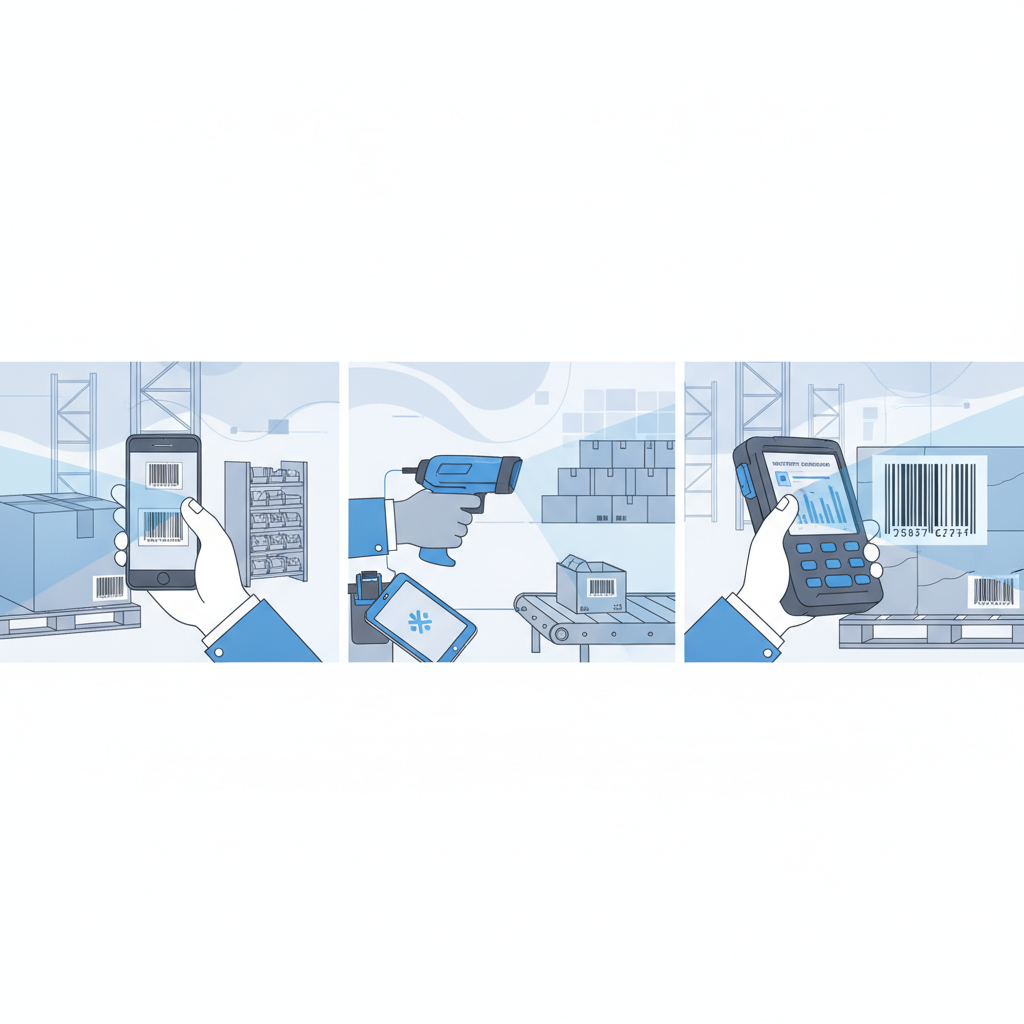
Phone camera barcode scanning uses a regular smartphone's camera, running in the browser, to read barcodes at receiving, putaway, picking, and dispatch, while a Bluetooth gun is a separate handheld scanner paired to a phone or tablet, and a rugged handheld is a dedicated industrial device that runs its own operating system and app. Shipider runs on phone camera scanning by default, which means any Android or iOS phone becomes a scanning station the moment a worker opens a browser tab, no gun, no rugged device, and no separate app install required.
Warehouse managers researching this decision usually already own smartphones for their team and are trying to figure out whether they still need to buy scan guns or rugged devices on top of that. The honest answer depends on volume, environment, and how fast you need to get new staff or new sites scanning. This article breaks down the three approaches side by side so you can make that call with real tradeoffs instead of guesses.
What each scanning method actually is
Before comparing numbers, it helps to be precise about what each option involves, because the terms get used loosely in vendor pitches.
Phone camera scanning (browser-based)
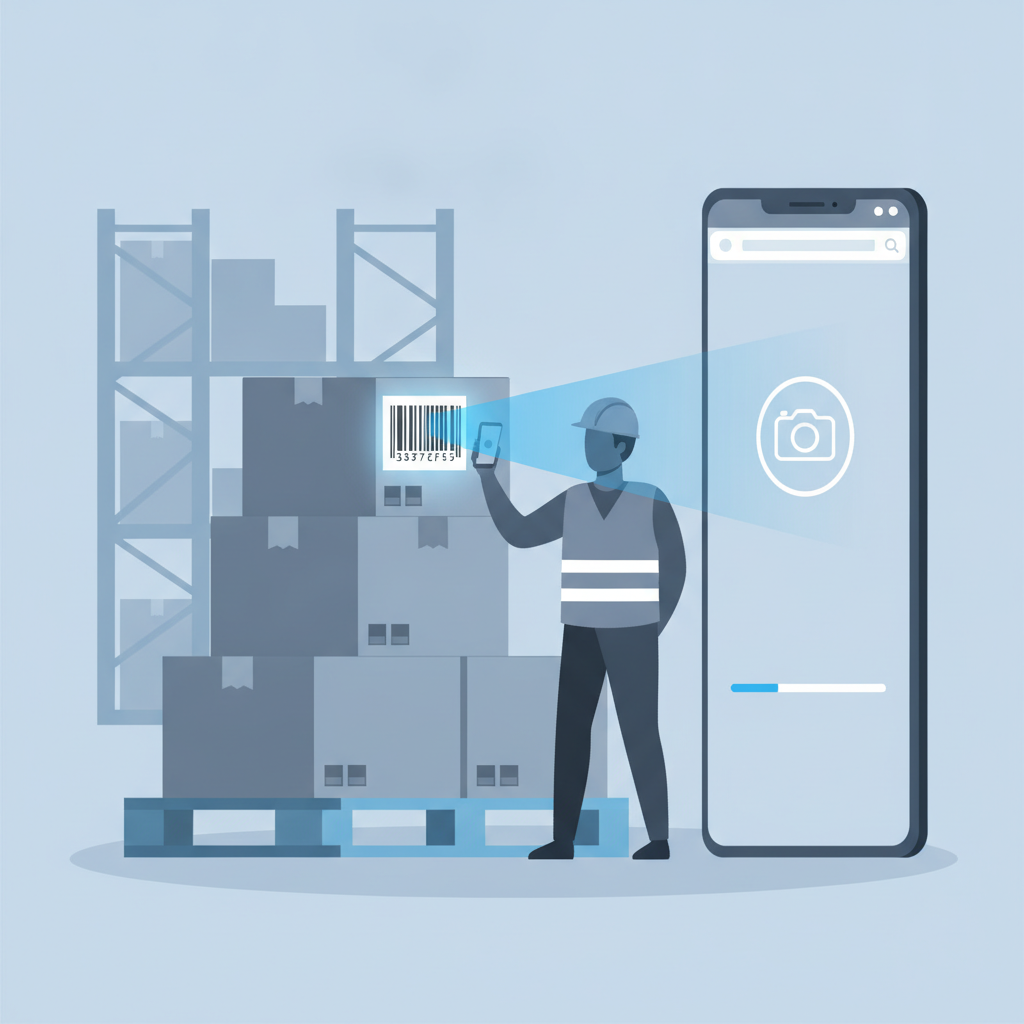
This is a phone's built-in camera reading a 1D or 2D barcode through a web page, with no companion app to install and no pairing step. Shipider's scanning runs this way: a worker opens a link on their phone, the browser asks for camera permission once, and from that point every receive, putaway, pick, and pack action happens through the same interface used for the rest of the warehouse workflow, including the maker-checker second scan. Because it is browser-based, updates ship instantly and there is no device fleet to patch.
Bluetooth barcode gun
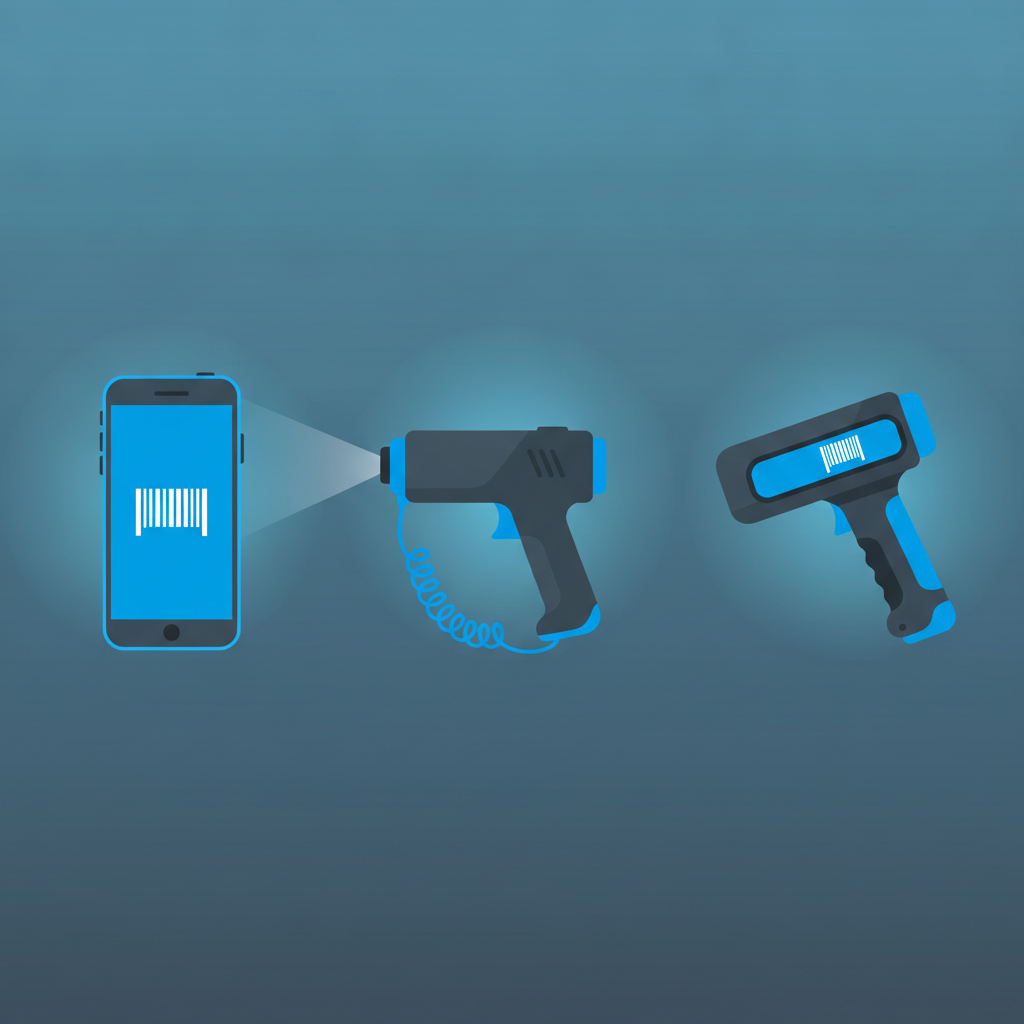
A Bluetooth gun is a dedicated scanning wand that pairs with a phone or tablet over Bluetooth and usually emulates a keyboard, sending scanned data into whatever app or field is active. It offloads the actual scan engine to purpose-built hardware, which can help in low light or at longer read distances, but it adds a device to buy, charge, pair, and eventually replace.
Rugged handheld computer
A rugged handheld is a single device that combines a scan engine, a screen, and an operating system (commonly Android or Windows) built to survive drops, dust, and cold storage. It runs a dedicated warehouse app rather than a general browser, and it is the closest thing to what people picture when they think "warehouse scanner." It is also the most expensive and slowest option to deploy at scale.
Side-by-side comparison
| Factor | Phone camera (browser) | Bluetooth gun | Rugged handheld |
|---|---|---|---|
| Upfront hardware cost | None, uses existing phones | Per-unit cost for each gun | Highest per-unit cost, often 5 to 10x a gun |
| Setup time per worker | Minutes, open a browser tab | Pairing plus app install | Device provisioning, MDM enrollment, app install |
| Onboarding a new site or seasonal staff | Same day, no shipping hardware | Requires guns to be shipped or already on hand | Requires devices to be shipped, configured, and tracked |
| Maintenance and repair | None, it's the worker's own phone | Batteries, pairing drift, physical wear | Repair contracts, replacement units, firmware updates |
| Read distance and speed at very high volume | Good for most SKU and pallet labels | Strong, built for rapid-fire scanning | Strong, built for rapid-fire scanning |
| Multi-site or multi-tenant rollout | Instant, same login works anywhere | Guns must be physically distributed per site | Devices must be physically distributed and managed per site |
| Works with existing staff phones | Yes | No, needs a paired device | No, needs its own device |
| Typical fit | SMB warehouses, 3PLs, e-commerce brands, distributed teams | Mid-volume single-site operations already invested in guns | Cold storage, extreme environments, very high daily scan volume |
Where phone camera scanning wins
The clearest advantage is speed of deployment. If you are onboarding a new 3PL client, opening a second site, or hiring for peak season, a Bluetooth gun or rugged handheld means someone has to order hardware, wait for it to arrive, unbox it, charge it, and pair or provision it before a new worker can scan anything. With phone camera scanning, a new hire scans their first pallet within minutes of getting a login, because the device is already in their pocket.
This matters even more for 3PLs running multiple customers under one roof. Structural multi-tenant isolation combined with camera-based scanning means a client's team can start receiving inventory the same day a contract closes, without a hardware order sitting in the critical path. For a deeper look at how that isolation works across billing and client roll-ups, see our guide on running a multi-tenant 3PL warehouse.
Cost is the second driver. Every gun or rugged unit you buy is a line item, a charger, a spare, and eventually a repair or replacement. Phone camera scanning turns that fixed hardware cost into zero, since it rides on phones your team already carries. If you're comparing that against a token-based or per-seat WMS model, it's worth reading how usage-based vs per-seat WMS pricing actually plays out over a year.
Where Bluetooth guns and rugged handhelds still make sense
Hardware scanners are not obsolete. If your team is doing thousands of scans per shift in a cold storage room where phone touchscreens get finicky with gloves, or where phone batteries drain fast in freezing temperatures, a dedicated gun or rugged device built for that environment can still be the right call. Extreme drop environments, extended shifts without charging access, or facilities with strict no-personal-device policies are all legitimate reasons to keep hardware in the mix.
The honest tradeoff is that these environments are a minority of small and mid-sized warehouse floors. Most SMB warehouses, e-commerce fulfillment operations, and general 3PL floors are not running sub-zero freezers all day, and the added cost and provisioning time of dedicated hardware rarely pays for itself compared to what a phone already does well.
How Shipider's browser scanning fits into the full workflow
Camera-based scanning is not a standalone feature bolted onto Shipider, it is the front door to the same audit trail that tracks every pallet and SKU movement across receiving, putaway, picking, and dispatch. Every scan feeds the maker-checker verification step, so a second person confirms what the first person scanned before an order ships, without needing a separate device to hand off. That is a meaningful difference from Bluetooth guns and rugged handhelds, which usually just feed data into a screen rather than into a two-step verification flow tied to a full audit history.
Because the scanning happens in the browser, it also connects naturally to the rest of a warehouse's tech stack. If you're already piping data in and out through an API or webhooks, our post on warehouse webhooks and API covers how scan events can trigger downstream automation without any middleware. For the original deep dive on why hardware-free scanning works for small and mid-sized floors, see browser barcode scanning with no dedicated hardware.
A simple way to decide
Ask three questions before you buy any hardware. First, how fast do you need new workers or new sites scanning, same day or same month? Second, is your environment genuinely extreme (deep freeze, constant drops, gloves that make touchscreens unreliable) or just a normal ambient warehouse? Third, what does the hardware actually cost once you include chargers, spares, repairs, and provisioning time across every site you run?
For most small and mid-sized warehouses, 3PLs onboarding new clients, and e-commerce brands running multi-site inventory, phone camera scanning removes a whole category of hardware logistics from the rollout. If your operation runs mostly in normal conditions and you already carry phones on the floor, that's the fastest path to accurate scanning without a purchase order. If you want to see how this fits an e-commerce fulfillment stack specifically, our e-commerce solutions page and the 3PL solutions page both walk through it in more detail.
Frequently asked questions
Is phone camera barcode scanning as accurate as a Bluetooth gun?
For standard 1D and 2D barcodes on labels, pallets, and SKUs in normal warehouse lighting, phone camera scanning reads reliably enough for receiving, putaway, picking, and dispatch. Dedicated guns can have an edge in very low light or at longer read distances, but most SMB warehouse floors don't operate under those conditions daily.
Do I need to buy any hardware to use Shipider's scanning?
No. Shipider's barcode scanning runs directly in a phone's browser, so any Android or iOS device your team already carries works as a scanning station without a gun, a rugged handheld, or an app install.
Can a Bluetooth gun still be paired with a phone running Shipider?
[NEEDS VERIFICATION: confirm whether Shipider's browser scanning interface currently supports Bluetooth scanner input via keyboard emulation as an optional add-on]
Which option is cheaper for a growing 3PL onboarding new clients?
Phone camera scanning is typically cheaper for growth because it has no per-unit hardware cost and no provisioning delay. A 3PL can onboard a new client's team on day one using existing staff phones, while Bluetooth guns and rugged handhelds require ordering, shipping, and configuring physical devices before anyone can scan.
When does a rugged handheld still make sense over a phone?
Rugged handhelds make sense in extreme environments such as deep-freeze cold storage, facilities with constant drops onto concrete, or workflows requiring gloves that make touchscreens unreliable. Outside of those specific conditions, the added cost and provisioning time rarely pay off compared to phone camera scanning.
Ready to see hardware-free scanning on your own floor? Create a free Shipider account and start receiving your first pallet with nothing but the phone already in your pocket.
Related reading: Do You Need a Barcode Scanner Gun for Your Warehouse?
Related reading: Do You Need a Barcode Scanner Gun? A Decision Framework for Warehouses