
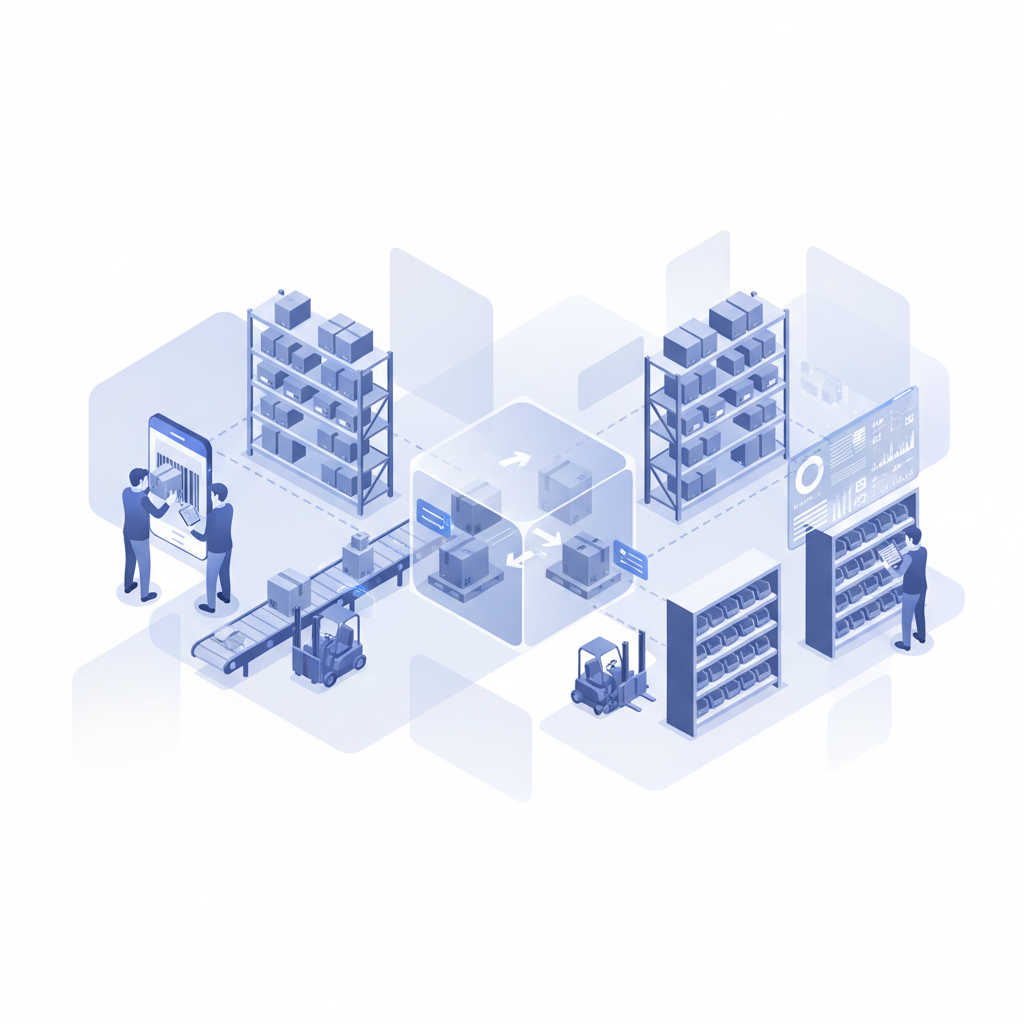
Cross-docking is a warehouse flow where inbound goods move straight from receiving to an outbound shipment with little or no time spent in storage, and Shipider supports this by linking a scanned receipt directly to an open order or transfer so the item never has to get a permanent warehouse location. Instead of putting stock away and picking it later, the crew unloads a truck, matches it to a waiting order, and reloads it, often within the same shift. For small and mid-size warehouses with limited square footage, that can mean less rack space tied up, fewer touches per unit, and faster turns on fast-moving or promised-date freight.
What cross-docking actually means on a small floor
In a large distribution center, cross-docking usually involves dedicated cross-dock doors, conveyor lanes, and freight arriving on a fixed schedule against known outbound loads. Most small and mid-size operations do not have that luxury. Cross-docking on a tighter floor usually looks more modest: a pallet comes in already earmarked for a specific outbound order, a staging area near the dock holds it for a few hours instead of weeks, and the same team that receives it also loads it out.
The mechanics do not change much from that scale-down. What matters is that the system knows, at the moment of receiving, which SKUs are destined for direct dispatch and which need to go to a warehouse location for later picking. Without that distinction, cross-dock freight gets treated like everything else, someone puts it away, and the time savings disappear.
When cross-docking makes sense (and when it does not)
Cross-docking earns its keep in a few recurring situations:
- Pre-sold or pre-allocated inbound freight, where a purchase order already matches a specific customer order or store replenishment.
- High-velocity SKUs that turn fast enough that storage adds no real value, just handling time.
- Retail or 3PL replenishment runs where a supplier ships consolidated pallets that need to be broken down and redirected to multiple outbound loads the same day.
- Time-sensitive or perishable goods where every extra day in a location increases risk or cost.
It makes less sense for irregular demand, SKUs that need quality inspection before release, or freight that arrives without a confirmed outbound match. Forcing cross-docking onto unpredictable inventory usually just creates staging pileups near the dock, which is its own kind of clutter. A hybrid approach, where only the confirmed portion of a shipment cross-docks and the rest goes to a normal warehouse location, is often the more honest fit for a small team still learning its volume patterns. If you have not settled on a location strategy for the rest of your SKUs yet, the warehouse slotting and location strategy guide is a good next read.
The core workflow: dock to dock without a storage detour
A workable cross-dock flow on a small floor generally runs through four steps.
1. Confirm the match before the truck arrives
Cross-docking depends on knowing, ahead of receiving, that an inbound line is tied to a specific outbound order or transfer. That match can come from a purchase order flagged for direct ship, a customer backorder, or a 3PL client's replenishment request. If that link is not confirmed before the trailer doors open, the safer default is to receive normally and putaway to a location.
2. Scan on receipt, not after a delay
The item still needs to be scanned in at the dock so there is a record of what arrived, in what condition, and at what time. In-browser barcode scanning matters here because it means the receiving clerk does not have to wait for a dedicated scanner gun to be free, any phone at the dock door can capture the SKU, quantity, and pallet ID on the spot.
3. Stage briefly, with a clear owner
Even fast cross-dock freight usually sits for an hour or two in a staging zone near the dock. That staging spot should be treated like any other tracked location, not an informal pile, so a pallet does not quietly become lost inventory between the inbound and outbound scans.
4. Verify before it leaves
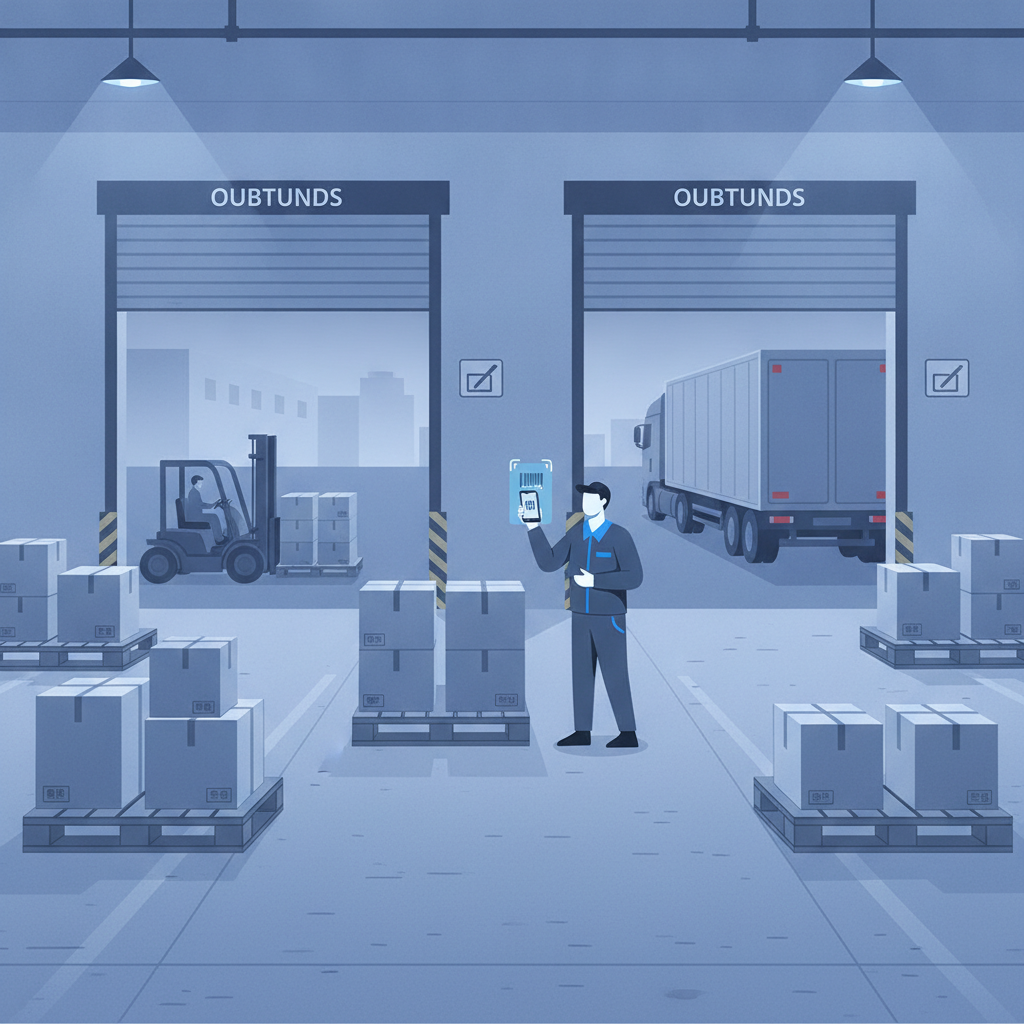
The step most small operations skip is a second check before the freight goes back out. A maker-checker step at dispatch, where one person stages the load and a second confirms quantities and destination against the order, catches the kind of mismatch that is easy to make when freight barely stops moving. This is the same two-person verification pattern that already prevents mis-ships on standard picking; cross-docking just compresses the timeline, so the check matters more, not less.
What goes wrong without the right controls
Cross-docking fails in fairly predictable ways when it is run on instinct instead of a documented process. A few common ones:
- Silent misallocation: a pallet meant for Customer A gets loaded onto the truck for Customer B because nobody re-verified the match at load time.
- Phantom staging: freight sits in an informal spot near the dock that is not a tracked location, so system inventory says it is somewhere it is not.
- No audit trail on damage claims: if freight is cross-docked and damage is discovered downstream, there is no record of its condition at receipt to settle a dispute.
- Overcommitted cross-docking: a team starts cross-docking everything to save time, then discovers demand shifted and the freight has nowhere confirmed to go.
These are process gaps, not volume problems, they show up just as often in a 5,000 square foot warehouse as a 500,000 square foot one. The fix is the same regardless of size: every cross-dock pallet gets a scan on the way in, a tracked staging location while it waits, a verification step on the way out, and a timestamped record tying all three together.
Cross-docking vs standard putaway vs hybrid flow-through
| Flow type | Typical dwell time | Best fit | Main risk if unmanaged |
|---|---|---|---|
| Standard receiving to putaway | Days to weeks | Unpredictable demand, SKUs needing inspection, safety stock | Slower turns, more storage used than needed |
| Pure cross-docking | Hours, same day | Pre-matched orders, high-velocity SKUs, time-sensitive freight | Misallocation or lost staging inventory without verification |
| Hybrid flow-through | Split: some units cross-dock, remainder to location | Consolidated inbound pallets serving multiple outbound needs | Confusion over which units are which without clear tagging at receipt |
How Shipider supports cross-docking without new hardware
Shipider is built around the same audit trail whether stock goes to a location or straight back out the door. A pallet or SKU scanned at receiving carries its history forward: who received it, when, its condition, and now, if it is a cross-dock item, which outbound order it is tied to. Because barcode scanning runs in the browser on any phone, the receiving team does not need a dedicated scanner gun sitting at the cross-dock lane, the same device used for normal receiving works at the staging area too.
The maker-checker verification step applies at dispatch regardless of whether the item ever touched a shelf, so a cross-docked pallet gets the same second look before it leaves that a picked order would. For 3PLs running cross-dock lanes for multiple clients, multi-tenant isolation keeps each client's inbound and outbound freight separated in the system even when it is physically staged in the same small area for a few hours. And because pricing is token-based rather than tied to seats or a lengthy implementation, a warehouse can test a cross-dock lane for one client or one product line before deciding whether to expand it, without a new contract or a new piece of hardware.
If your dock currently relies on paper notes or a whiteboard to track what is staged and where it is headed, the receiving to putaway best-practice guide covers the receiving-side fundamentals that a cross-dock flow builds on top of.
Building a cross-dock lane on a tight floor plan
Most small warehouses do not need to redesign their layout to start cross-docking. A few practical steps get a first lane running:
- Pick one or two SKUs or one recurring customer relationship where inbound and outbound timing already line up closely.
- Mark a small staging zone near the dock as a real, named location in the system, not just floor space.
- Require a scan at receipt and a second scan or check at load-out, even if it feels redundant for a small volume.
- Review the first two weeks of cross-dock activity against the audit trail to confirm nothing is drifting into unmatched or lost staging inventory.
- Expand to more SKUs only once the first lane runs cleanly for a full peak or off-peak cycle.
If your warehouse is heading into a high-volume period, it is worth reviewing the peak season warehouse prep checklist before adding a new flow like cross-docking on top of existing pressure. For a broader look at how operations decisions like this fit together, the warehouse operations hub covers the surrounding topics, from slotting to picker task management.
Frequently asked questions
What is cross-docking in a warehouse?
Cross-docking is a process where inbound goods are unloaded, matched to an outbound order, and reloaded for shipment with little or no time spent in storage, instead of being put away to a warehouse location first.
Is cross-docking worth it for a small warehouse?
It can be, particularly for pre-matched orders, high-velocity SKUs, or time-sensitive freight, but it usually only makes sense for a portion of inventory rather than the whole operation, since unpredictable demand still needs standard storage.
Do you need special equipment to cross-dock?
No. A small cross-dock lane needs a defined staging area near the dock and a way to scan and verify freight at receipt and at load-out. It does not require conveyor systems or dedicated cross-dock doors to get started at a small scale.
What is the biggest risk with cross-docking?
Misallocation, where freight meant for one order or customer ends up on the wrong outbound load, is the most common failure. A verification step before the load leaves the dock is the main safeguard against this.
How is cross-docking different from a hybrid flow-through model?
Pure cross-docking moves all of an inbound shipment straight to outbound. Hybrid flow-through splits the shipment: part goes directly to an outbound order and the rest goes to a warehouse location, which is common when a consolidated inbound pallet serves more than one purpose.
If you want to see how receiving, staging, and dispatch connect in Shipider with a real audit trail on every pallet, create a free account and try a cross-dock flow on your own floor.
Related reading: Warehouse Layout Design for Small Warehouses on a Tight Budget
Related reading: Inbound Freight and Dock Scheduling for Small Warehouses