

Cold chain warehouse management is the practice of tracking temperature-sensitive inventory (lot numbers, batch codes, expiry dates, and storage zones) with enough precision that a warehouse can prove what shipped, when, and in what condition. Shipider supports this by pairing lot and batch tracking with pallet-level traceability, FEFO-aware putaway logic, and a maker-checker verification step, so every movement of chilled or frozen stock leaves a record someone can actually use later.
Cold storage is not just a colder version of a normal warehouse. The inventory has a shelf life that keeps moving whether anyone is watching it or not, and the stakes for getting a pick wrong are higher: a mis-shipped lot of frozen seafood or a vaccine batch past its window is not a minor inconvenience, it is a compliance problem and sometimes a safety one. The operational logic underneath has to account for that clock.
What makes cold chain warehouse management different
A dry goods warehouse can usually recover from a slotting mistake. Cold chain cannot absorb the same kind of slack. Three things separate it from standard warehouse operations:
- Expiry is the primary sort key. Picking logic has to favor the stock that expires soonest, not the stock that is easiest to reach.
- Every zone matters, not just every bin. A SKU might exist in a freezer zone, a chill zone, and a dry staging zone simultaneously, and the system needs to know which unit is in which zone at all times.
- Documentation requirements are heavier. Recalls, audits, and customer disputes all ask for lot-level history, not just a total unit count.
None of this is solved by a thermometer on the wall. It is solved by inventory data that is granular enough to answer specific questions fast: which lot shipped to which customer, which pallet sat in which location, and who verified the pick before it left the dock.
The core tracking requirements for temperature-sensitive inventory
Lot and batch tracking tied to storage zones
Cold chain inventory almost always arrives with a lot or batch code from the supplier. That code needs to stay attached to the stock through receiving, putaway, picking, and dispatch, along with the specific warehouse location it was stored in. Shipider's lot and batch tracking keeps that link intact across the floor, so a single lot can be traced through every location it touched, not just the one it started in. For a deeper look at how this works for perishable and regulated inventory generally, see the lot and batch tracking guide.
FEFO rotation instead of FIFO
Dry goods warehouses often run first-in-first-out. Cold chain needs first-expired-first-out, because the oldest lot by receiving date is not always the one closest to going bad. Shipider tracks expiry and lot data at the SKU and location level, which lets pickers be directed to the soonest-expiring stock rather than whatever happens to be nearest the door. The expiry logic and serial-level detail are covered in more depth in the serial number and expiry tracking article.
Pallet-level traceability for recalls and disputes
When a customer disputes a shipment, or a recall notice comes down for a specific lot, the warehouse needs to answer fast: which pallets, which locations, which orders. Shipider's pallet tracking attaches photos, signatures, and movement history to each pallet, so a recall query that used to take a day of digging through paper logs becomes a lookup. This is the same mechanism behind the existing cold chain FEFO case study, where expiry-aware picking and pallet evidence were used together on one floor.
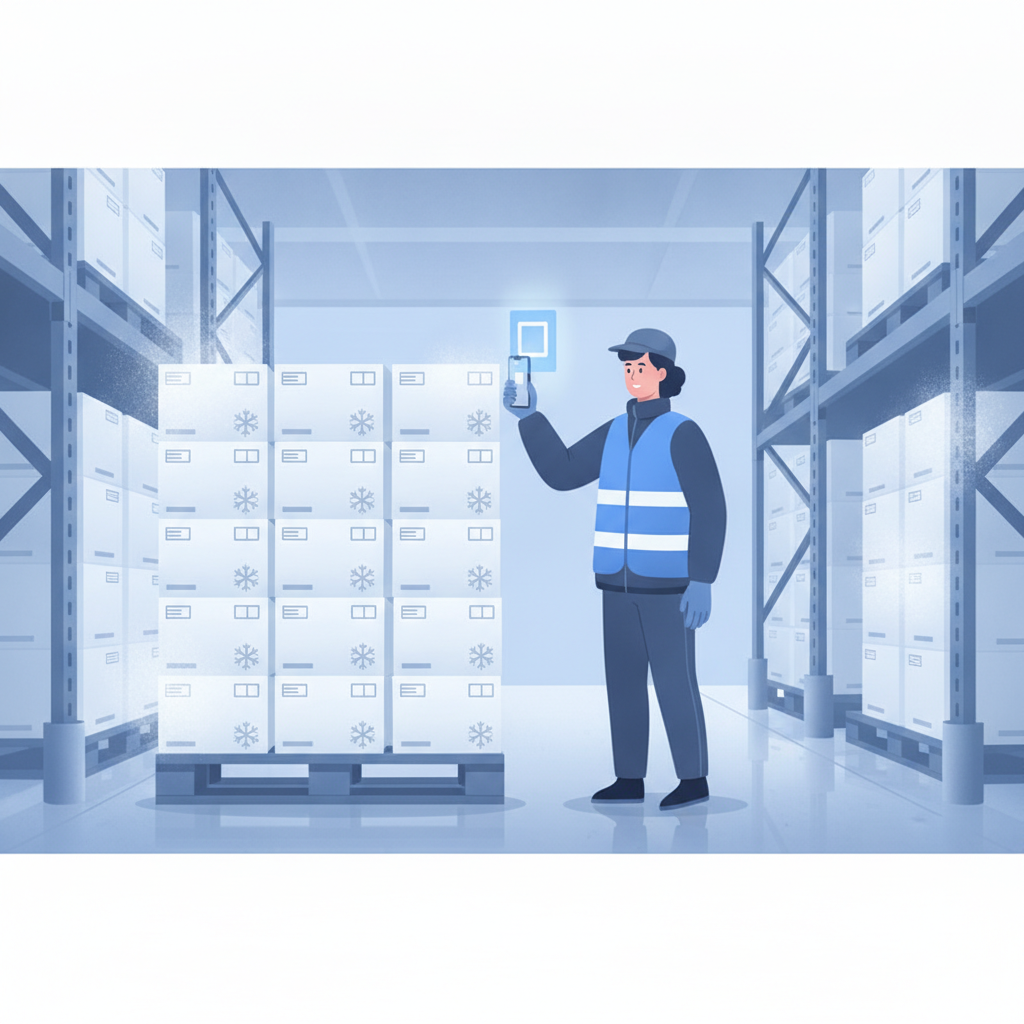
Where a WMS actually fits into a cold chain operation
It helps to be precise about what a system like Shipider does and does not do. It is not a temperature monitoring system. It does not read sensor data off a freezer unit and it does not replace a building's environmental controls. What it does is manage the inventory data layer that sits next to those systems: what is where, how old it is, who touched it, and whether it was verified before it moved.
| Cold chain requirement | How Shipider handles it |
|---|---|
| Track lot/batch through every movement | Lot and batch tracking persists across receiving, putaway, picking, and dispatch |
| Pick soonest-expiring stock first | Expiry data drives FEFO-style putaway and pick guidance at SKU and location level |
| Prove what shipped on a disputed or recalled order | Pallet-level traceability with photos, signatures, and a real audit trail |
| Catch picking errors before dispatch | Maker-checker two-step verification requires a second scan before an order ships |
| Run multiple chilled sites or a 3PL with several cold-storage clients | Multi-site inventory and structural multi-tenant isolation |
| Scan in a freezer without rugged hardware | Camera-based barcode scanning runs in the browser on any phone, no scanner guns to maintain |
| Read live temperature or humidity sensor data | [NEEDS VERIFICATION: whether direct IoT/sensor integration is available or planned] |
A typical cold chain receiving-to-dispatch flow
In practice, a cold chain warehouse running on Shipider moves through a flow that looks close to any other warehouse, with the lot and expiry data layered in at each step:
Receiving
Inbound pallets get scanned in with lot number, batch code, and expiry date captured at the dock, before anything moves to a storage zone. Any temperature excursion noted on the carrier's paperwork or a damaged case gets logged with a photo right there, the same way it would in a standard inbound quality check.
Putaway
Stock gets assigned to a specific chilled or frozen warehouse location, and that location stays tied to the lot record. If the same SKU exists in two zones at different expiry stages, the system keeps them distinct rather than blending them into one undifferentiated count.
Picking with FEFO logic
Order pickers are guided to the lot closest to expiry first, not the lot that is easiest to grab. This is the step where most cold chain accuracy problems start if it is left to memory or a paper sheet taped to a rack.
Maker-checker verification before dispatch
Before an order leaves the building, a second person scans and confirms the pick against the order. This catches the kind of mistake that is easy to make under cold, time-pressured conditions, like grabbing the wrong lot of a visually identical SKU. The two-step check is explained in general terms in what a maker-checker workflow is, and the same logic applies whether the product is frozen seafood or ambient dry goods.
Dispatch and audit trail
Every scan, every location change, and every verification step gets written to a real audit trail. When a customer or auditor asks for proof of handling on a specific shipment, the warehouse has it on hand instead of reconstructing it from memory.
Multi-site and multi-tenant cold chain operations
Cold chain operators frequently run more than one facility, or run a 3PL model where several brand owners' chilled inventory sits under one roof. Shipider's multi-site inventory keeps stock counts and lot data separate and accurate across locations, so a transfer between a regional cold store and a cross-dock facility does not create a phantom count or a lost lot. For 3PLs specifically, structural multi-tenant isolation keeps each customer's inventory, users, and audit history walled off from the others, which matters more in cold storage than almost anywhere else, since a mixed-up lot between two clients is a compliance headache, not just a reconciliation task. The 3PL solutions page covers the multi-tenant model in more detail, and the multi-tenant 3PL warehouse guide walks through isolation and billing specifics.
Getting started without a six-month rollout
Cold chain operators often assume this kind of tracking requires an enterprise system with a long implementation timeline and dedicated hardware. Shipider runs in the browser on phones already on the floor, uses token-based pricing instead of per-seat licensing, and does not require a hardware rollout before go-live. That matters for a cold storage operator weighing whether to upgrade from spreadsheets or a legacy system without pausing operations for months. Pricing details are on the pricing page.
Frequently asked questions
What is cold chain warehouse management?
Cold chain warehouse management is the process of tracking temperature-sensitive inventory, such as food, pharmaceuticals, or perishable goods, through receiving, storage, picking, and dispatch with enough detail on lot, batch, expiry, and location to prove handling history and support FEFO rotation.
What is FEFO and how is it different from FIFO?
FEFO stands for first-expired-first-out, meaning the stock closest to its expiry date is picked first regardless of when it arrived. FIFO (first-in-first-out) picks based on receiving order instead, which can leave a batch with a shorter remaining shelf life sitting on the shelf longer than it should.
Does Shipider monitor temperature or humidity directly?
No. Shipider manages inventory data such as lot numbers, batch codes, expiry dates, warehouse locations, and movement history. It does not replace a facility's temperature monitoring or environmental control systems; it works alongside them to keep inventory records accurate. [NEEDS VERIFICATION: confirm current state of any sensor or IoT integration roadmap.]
How does pallet-level traceability help with recalls?
Pallet-level traceability attaches photos, signatures, and a full movement history to each pallet, so when a recall notice names a specific lot, a warehouse can look up every location and order that pallet touched instead of manually searching paper logs or spreadsheets.
Can a 3PL run cold storage for multiple clients on one system?
Yes. Shipider's multi-tenant isolation keeps each client's inventory, lot data, and audit history separate even when multiple cold-storage customers share the same physical facility, which avoids cross-client mix-ups during picking or billing.
If temperature-sensitive inventory is outgrowing your spreadsheet or paper log, register for Shipider and set up lot tracking, FEFO picking, and maker-checker verification on your floor without a hardware rollout.
Related reading: Apparel and Footwear Fulfillment: Managing Size and Color SKU Variants in a WMS