

Cold chain warehouse management is the practice of tracking temperature-sensitive inventory (lot numbers, batch codes, expiry dates, and storage zones) with enough precision that a warehouse can prove what shipped, when, and in what condition. Shipider supports this with pallet-level traceability (lot and expiry details can be recorded as tags on each pallet's SKU lines, with a photo of the label), receiving condition codes such as temperature excursion or refrigeration failed, location history, and a maker-checker verification step, so every movement of chilled or frozen stock leaves a record someone can actually use later.
Cold storage is not just a colder version of a normal warehouse. The inventory has a shelf life that keeps moving whether anyone is watching it or not, and the stakes for getting a pick wrong are higher: a mis-shipped lot of frozen seafood or a vaccine batch past its window is not a minor inconvenience, it is a compliance problem and sometimes a safety one. The operational logic underneath has to account for that clock.
What makes cold chain warehouse management different
A dry goods warehouse can usually recover from a slotting mistake. Cold chain cannot absorb the same kind of slack. Three things separate it from standard warehouse operations:
- Expiry is the primary sort key. Picking logic has to favor the stock that expires soonest, not the stock that is easiest to reach.
- Every zone matters, not just every bin. A SKU might exist in a freezer zone, a chill zone, and a dry staging zone simultaneously, and the system needs to know which unit is in which zone at all times.
- Documentation requirements are heavier. Recalls, audits, and customer disputes all ask for lot-level history, not just a total unit count.
None of this is solved by a thermometer on the wall. It is solved by inventory data that is granular enough to answer specific questions fast: which lot shipped to which customer, which pallet sat in which location, and who verified the pick before it left the dock.
The core tracking requirements for temperature-sensitive inventory
Lot and batch tracking tied to storage zones
Cold chain inventory almost always arrives with a lot or batch code from the supplier. That code needs to stay attached to the stock through receiving, putaway, picking, and dispatch, along with the specific warehouse location it was stored in. Shipider does not have dedicated lot or batch fields, but the code can be recorded as a tag on the pallet's SKU line, with a photo of the supplier label, and the pallet's location history then shows every location it touched, not just the one it started in. For a deeper look at how this works for perishable and regulated inventory generally, see the lot and batch tracking guide.
FEFO rotation instead of FIFO
Dry goods warehouses often run first-in-first-out. Cold chain needs first-expired-first-out, because the oldest lot by receiving date is not always the one closest to going bad. Shipider does not apply FEFO logic or direct pickers automatically. What it gives you is the data to run FEFO as a process: expiry dates recorded as tags on pallet SKU lines, and the current location of every pallet, so your team can find the soonest-expiring stock rather than whatever happens to be nearest the door. Expiry and serial tracking practices are covered in more depth in the serial number and expiry tracking article.
Pallet-level traceability for recalls and disputes
When a customer disputes a shipment, or a recall notice comes down for a specific lot, the warehouse needs to answer fast: which pallets, which locations, which orders. Shipider's pallet tracking keeps pallet and label photos, condition photos, and location history for each pallet, and orders carry truck photos and a driver signature, so a recall query that used to take a day of digging through paper logs becomes a search. For a worked example, see the cold chain FEFO case study.
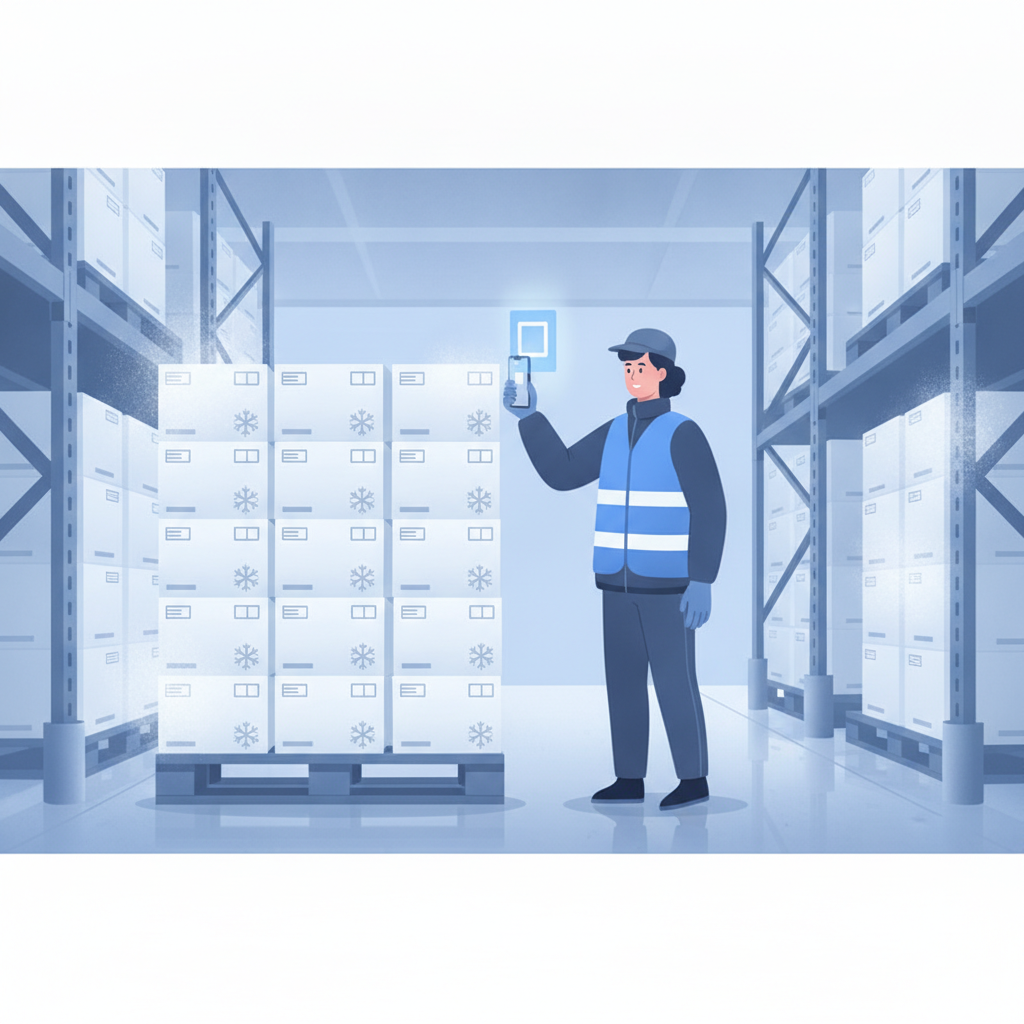
Where a WMS actually fits into a cold chain operation
It helps to be precise about what a system like Shipider does and does not do. It is not a temperature monitoring system. It does not read sensor data off a freezer unit and it does not replace a building's environmental controls. What it does is manage the inventory data layer that sits next to those systems: what is where, how old it is, who touched it, and whether it was verified before it moved.
| Cold chain requirement | How Shipider handles it |
|---|---|
| Track lot/batch through every movement | Lot or batch recorded as a tag on the pallet's SKU line, with a label photo, while location history follows the pallet |
| Pick soonest-expiring stock first | No built-in FEFO logic; expiry tags and pallet locations let your team run FEFO as a process |
| Prove what shipped on a disputed or recalled order | Pallet-level traceability with photos, driver signatures, and location history |
| Catch picking errors before dispatch | Maker-checker two-step verification: a second person confirms a processed order |
| Run multiple chilled sites or a 3PL with several cold-storage clients | Multiple warehouses in one account, with each client kept as its own customer record |
| Scan in a freezer without rugged hardware | Camera-based barcode scanning runs in the browser on any phone, no scanner guns to maintain |
| Record a temperature problem at receiving | Condition codes such as temperature excursion, frozen items thawed, chilled items frozen, or refrigeration failed, with photos |
| Read live temperature or humidity sensor data | Not supported; use your facility's monitoring system |
A typical cold chain receiving-to-dispatch flow
In practice, a cold chain warehouse running on Shipider moves through a flow that looks close to any other warehouse, with lot and expiry details recorded alongside the pallet data:
Receiving
Inbound pallets get scanned in at the dock, with lot number, batch code, and expiry date recorded as tags on each pallet's SKU lines and a photo of the label, before anything moves to a storage zone. A temperature excursion, thawed or refrigeration-failed condition, or a damaged case gets recorded as a condition code with photos right there, the same way it would in a standard inbound quality check.
Putaway
Each pallet gets moved to a specific chilled or frozen warehouse location, and that location is recorded in the pallet's history. If the same SKU exists in two zones at different expiry stages, the pallets stay distinct, each with its own tags and location, rather than blending into one undifferentiated count.
Picking with a FEFO routine
Pickers should take the lot closest to expiry first, not the lot that is easiest to grab. Shipider does not sequence this for you, so build the routine from the expiry tags and pallet locations, for example by having the person preparing the order check the tags before choosing a pallet. This is the step where most cold chain accuracy problems start if it is left to memory or a paper sheet taped to a rack.
Maker-checker verification before dispatch
Before an order leaves the building, a second person reviews and confirms the processed order. This catches the kind of mistake that is easy to make under cold, time-pressured conditions, like grabbing the wrong lot of a visually identical SKU. The two-step check is explained in general terms in what a maker-checker workflow is, and the same logic applies whether the product is frozen seafood or ambient dry goods.
Dispatch and audit trail
Location changes, order processing and confirmation, photos, and the driver signature at dispatch are all kept on the pallet and order records. When a customer or auditor asks for proof of handling on a specific shipment, the warehouse has it on hand instead of reconstructing it from memory.
Multi-site and multi-tenant cold chain operations
Cold chain operators frequently run more than one facility, or run a 3PL model where several brand owners' chilled inventory sits under one roof. Shipider supports multiple warehouses in one account and records transfers as TransferOut and TransferIn movements, so moving stock between a regional cold store and a cross-dock facility does not create a phantom count or a lost pallet. For 3PLs specifically, each client is its own customer record with its own SKUs, and your company's data is isolated from every other company on the platform, which matters more in cold storage than almost anywhere else, since a mixed-up lot between two clients is a compliance headache, not just a reconciliation task. The 3PL solutions page covers the multi-tenant model in more detail, and the multi-tenant 3PL warehouse guide walks through isolation and per-client setup.
Getting started without a six-month rollout
Cold chain operators often assume this kind of tracking requires an enterprise system with a long implementation timeline and dedicated hardware. Shipider runs in the browser on phones already on the floor, uses token-based pricing instead of per-seat licensing, and does not require a hardware rollout before go-live. That matters for a cold storage operator weighing whether to upgrade from spreadsheets or a legacy system without pausing operations for months. Pricing details are on the pricing page.
Frequently asked questions
What is cold chain warehouse management?
Cold chain warehouse management is the process of tracking temperature-sensitive inventory, such as food, pharmaceuticals, or perishable goods, through receiving, storage, picking, and dispatch with enough detail on lot, batch, expiry, and location to prove handling history and support FEFO rotation.
What is FEFO and how is it different from FIFO?
FEFO stands for first-expired-first-out, meaning the stock closest to its expiry date is picked first regardless of when it arrived. FIFO (first-in-first-out) picks based on receiving order instead, which can leave a batch with a shorter remaining shelf life sitting on the shelf longer than it should.
Does Shipider monitor temperature or humidity directly?
No. Shipider manages inventory data such as pallets, SKU lines (where lot and expiry can be recorded as tags), warehouse locations, and movement history, and it lets receivers record a temperature excursion or refrigeration failure with photos. It does not replace a facility's temperature monitoring or environmental control systems; it works alongside them to keep inventory records accurate.
How does pallet-level traceability help with recalls?
Pallet-level traceability keeps photos and a full location history for each pallet, alongside order photos and driver signatures, so when a recall notice names a specific lot, a warehouse can look up every location and order that pallet touched instead of manually searching paper logs or spreadsheets.
Can a 3PL run cold storage for multiple clients on one system?
Yes. In Shipider each client is its own customer record with its own SKUs, so pallets, lot tags, and orders stay attributed to the right client even when multiple cold-storage customers share the same physical facility, which avoids cross-client mix-ups during picking or when you prepare client billing in your own tool.
If temperature-sensitive inventory is outgrowing your spreadsheet or paper log, register for Shipider and start recording pallets with lot and expiry tags, temperature condition codes, and maker-checker verification on your floor without a hardware rollout.
Related reading: Apparel and Footwear Fulfillment: Managing Size and Color SKU Variants in a WMS